This article was researched and reviewed by Leo, an indoor plant specialist.
Repotting a large **Pachycereus pringlei** (Mexican Giant Cardon) requires specific logistical planning due to the specimen’s size, weight, and spines. When a cactus reaches five feet in height and significant weight, standard repotting techniques are insufficient. Moving these specimens requires a systematic approach to ensure the structural integrity of the plant and the safety of the handler.
Guide Overview
- The ‘Pre-Repot Fast’: Why Hydration is Necessary to Avoid Damage
- Turgor Pressure and Limb Snap Risk
- The 14-Day Drought Rule
- Assessing Columnar Stability Before the Move
- The Equipment Checklist: Specialized Protective Gear
- Why Leather Gloves are Ineffective Against Glochids
- Using Carpet Scraps and Styrofoam Blocks
- The Pool Noodle Shield Technique
- Heavy-Duty Silicon Tongs for Small Adjustments
- The ‘Cradle and Lever’ Method for Large Specimens
- Constructing a Burlap or Canvas Sling
- The Two-Person Pivot Maneuver
- Using a Hand Truck for Transitions
- Securing the Plant to Prevent Toppling
- Root Maintenance: Cleaning the Root System
- Identifying Dead vs. Dormant Roots
- The Chopstick Method for Soil Extraction
- When to Use Sterilized Pruning Shears
- Applying Sulfur Powder to Prevent Fungal Infection
- Substrate Composition for Longevity
- The 70/30 Mineral-to-Organic Ratio
- Why Pumice Outperforms Perlite for Heavy Plants
- Top-Dressing for Stability
- Avoiding the ‘Peat Plug’ Issue
- Post-Transplant Care: The ‘No-Water’ Period
- The 7-Day Callous Period
- Light Exposure Adjustments Post-Move
- Signs of Transplant Shock vs. Normal Settling
- The First Deep Soak: Timing and Technique
Standard gardening advice often suggests using thick gloves when handling cacti. However, for large specimens like a 60-pound **Echinocactus grusonii**, standard leather gloves are insufficient. Spines can penetrate leather and remain embedded in the lining, rendering the gloves unusable. Large cacti require a protocol that prioritizes structural stability and handler safety. If a cactus is outgrowing its container or leaning, a specific extraction and relocation procedure is required to prevent injury or damage to the plant’s main lead.
The ‘Pre-Repot Fast’: Why Hydration is a Risk Factor
Watering a large cactus immediately before repotting increases the risk of mechanical failure during the move.
Turgor Pressure and Limb Snap Risk
Cacti function as pressurized water storage vessels. When hydrated, vacuoles within the parenchyma cells reach full capacity, creating high turgor pressure. This state increases the brittleness of the plant tissue. A fully hydrated columnar cactus has reduced structural flexibility. Tilting or pivoting a heavy, hydrated specimen can cause the internal vascular bundles to shear under the plant’s own weight. Withholding water allows the plant to utilize internal reserves, causing vacuoles to shrink and making the tissue more flexible and resistant to torque during the move.
The 14-Day Drought Rule
Large specimens should undergo a minimum of 14 days of drought before repotting. This period typically results in a slight contraction of the plant’s diameter, providing a safety margin for handling. For plants recently acquired from retail environments, refer to technical guides on reviving clearance plants, noting that cactus recovery begins with a dry period rather than immediate irrigation.
Assessing Columnar Stability Before the Move
Before extraction, determine the plant’s center of gravity. Large cacti often exhibit asymmetric weight distribution based on their light source. Use a plumb line to identify the center of mass. If the center of mass falls outside the diameter of the current container, the risk of toppling is high. Temporary supports should be prepared to secure the plant during extraction.
The Equipment Checklist: Specialized Protective Gear
Spines are evolved to penetrate biological tissue. Certain species, such as **Opuntia**, possess glochids—microscopic barbed bristles that are difficult to remove from skin or fabric.
Why Leather Gloves are Ineffective Against Glochids
Leather is a porous material. Glochids can migrate through these pores and become permanently embedded in the glove’s interior lining. Effective handling requires materials that are either impenetrable or disposable.
Using Carpet Scraps and Styrofoam Blocks
Commercial carpet scraps with heavy woven backing are effective for handling large **Pachycereus**. Wrap the carpet around the plant with the pile-side facing inward. The backing prevents spines from reaching the hands. For species with large, individual spines like **Stetsonia coryne**, styrofoam blocks can be pressed onto the spines to create a flat, safe gripping surface.
The Pool Noodle Shield Technique
For columnar cacti, longitudinal sections of pool noodles can be placed over the ribs. This prevents bruising of the plant’s epidermis and protects the handler from spines.
Heavy-Duty Silicon Tongs for Small Adjustments
For final positioning in the new container, use 12-inch stainless steel tongs with silicon tips. Silicon provides necessary grip without damaging plant tissue, allowing for precise vertical alignment. Maintaining verticality is essential for long-term structural stability.
The ‘Cradle and Lever’ Method for Large Specimens
Moving a 50lb cactus is a mechanical task involving the management of weight and friction.
Constructing a Burlap or Canvas Sling
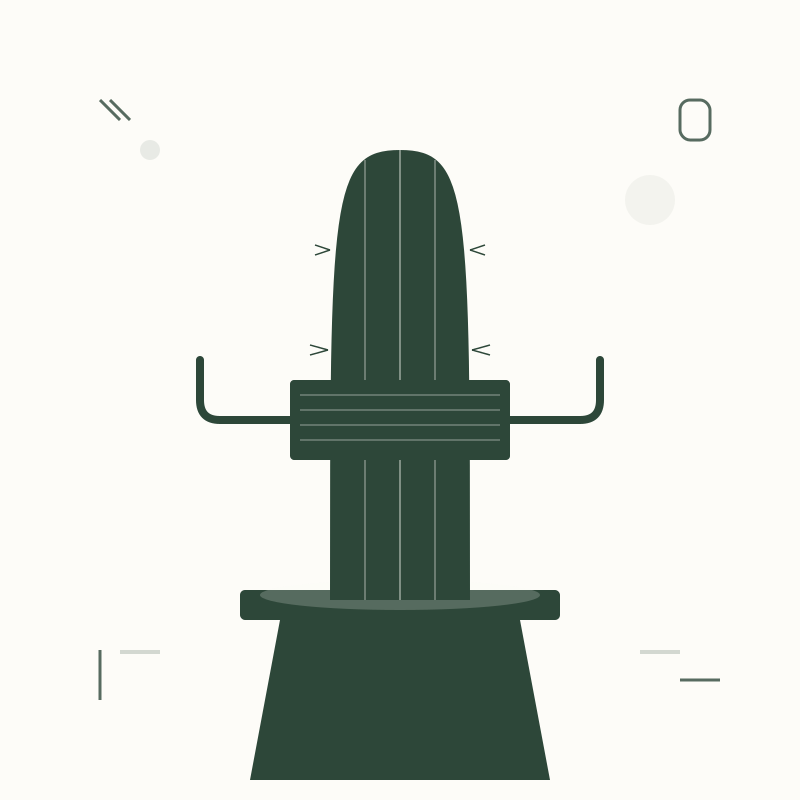
A canvas or heavy burlap sling should be used for very large specimens. A wide strip of material distributes weight across a larger surface area, preventing the material from cutting into the plant’s flesh.
The Two-Person Pivot Maneuver
This procedure requires two people: one to manage the base and one to stabilize the apex. The person at the apex uses the sling to maintain balance while the person at the base tilts the container. Mechanical advantage can be gained by securing sling ends to a sturdy handle. For more on stabilization, see the guide on plant staking.
Using a Hand Truck for Transitions
Use a hand truck for transport. Secure the container to the truck using ratchet straps. The plant itself should not be strapped but should be supported by carpet wraps or pool noodles while leaning against the truck frame.
Securing the Plant to Prevent Toppling
Once the root ball is removed, the plant lacks a stable base. Place the specimen horizontally on heavy foam or protective blankets. Do not leave a large cactus upright and unsupported during soil preparation.
Root Maintenance: Cleaning the Root System
Large cacti often become root-bound, forming a dense, hydrophobic mass of old organic matter. If this mass is not addressed, water may fail to reach the root core in the new container.
Identifying Dead vs. Dormant Roots
Cactus roots are dimorphic, consisting of fine, ephemeral “rain roots” and permanent, woody structural roots. Woody roots that are brittle and snap easily are dead. Living roots will be flexible and show pale tissue when lightly nicked.
The Chopstick Method for Soil Extraction
Avoid using high-pressure water to clean roots, as this increases rot risk. Use a bamboo chopstick to manually remove old soil from the root ball until the main root flare is exposed. Inspect for root mealybugs during this process. If pests are present, follow a decontamination protocol.
When to Use Sterilized Pruning Shears
If the root system contains necrotic or decaying tissue, use shears sterilized with 70% isopropyl alcohol to remove it. Prune back to healthy, white tissue to prevent the spread of decay.
Applying Sulfur Powder to Prevent Fungal Infection
Apply horticultural sulfur powder to any cut root ends. Sulfur acts as a desiccant and antifungal agent, protecting the plant from pathogens like **Fusarium** or **Phytophthora**.
Substrate Composition for Longevity
Standard commercial cactus mixes often contain excessive peat moss, which is too acidic and organic for large desert specimens. These plants require mineral-heavy, alkaline substrates.
The 70/30 Mineral-to-Organic Ratio
For large cacti, use a ratio of 70% inorganic mineral matter to 30% organic matter (such as high-quality compost or coco coir).
Why Pumice Outperforms Perlite for Heavy Plants
Perlite is lightweight and tends to float or crush under the weight of large plants. Pumice or expanded shale is preferred because it maintains aeration when wet and provides necessary ballast. Calcined clay or crushed granite can also be used to lower the center of gravity and increase stability.
Top-Dressing for Stability
Apply a two-inch layer of heavy rock or river stones to the surface. This provides physical stability while roots establish and helps prevent pest issues. For more on pest management, see the pest sanitization guide.
Avoiding the ‘Peat Plug’ Issue
Ensure all old peat is removed from the root core. A central mass of peat will retain moisture longer than the surrounding mineral mix, leading to uneven moisture distribution and potential root rot. Substrate consistency is required from the stem to the container edge.
Post-Transplant Care: The ‘No-Water’ Period
Immediate watering after repotting is a common cause of failure in large cacti.
The 7-Day Callous Period
Repotting causes micro-fractures in the roots and stem base. A mandatory seven-day dry period allows these wounds to callous via the production of suberin, a waxy, waterproof substance that prevents bacterial entry.
Light Exposure Adjustments Post-Move
Reduce light intensity for one week following a repot to minimize stress. Move the plant away from direct south-facing windows or dim artificial lights. For lighting specifications, refer to the grow light guide.
Signs of Transplant Shock vs. Normal Settling
Minor deflation or slight color changes are normal as the plant prioritizes root repair. Yellowing at the base or a foul odor indicates rot and requires immediate surgical intervention and sulfur application.
The First Deep Soak: Timing and Technique
After the callous period, perform a thorough watering to flush salts and settle the substrate. Use a long-neck can to keep the plant body dry. Water until drainage occurs. Subsequent watering should only occur once the substrate is fully dry, which may take several weeks depending on the specimen’s size.