This article was researched and reviewed by Leo, an indoor plant specialist.
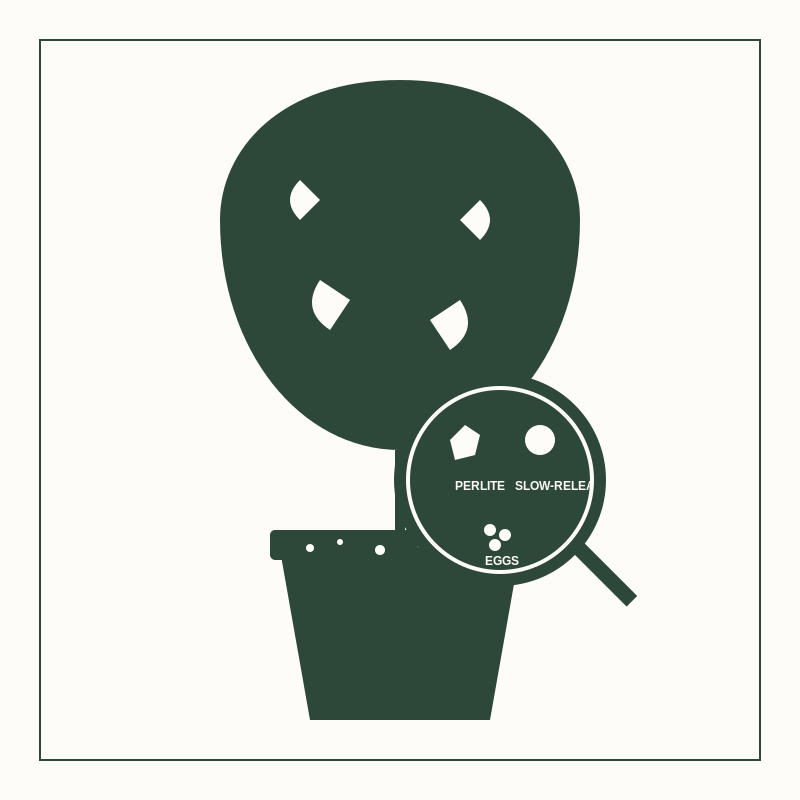
The appearance of white spheres in the drainage holes or soil surface of a Monstera often prompts concerns regarding pest infestations. Before applying treatments such as neem oil, it is necessary to identify the substance through physical examination. Different materials—ranging from inert minerals to fungal structures—require distinct management strategies.
Guide Overview
- The 5-Second Physical Identification Decision Tree
- 1. Mineral Identification (Perlite)
- 2. Controlled-Release Fertilizer Prills
- 3. Fungal Sclerotia Identification
- 4. Biological Identification (Pest Eggs)
- Soil Moisture Gradients in Low-Humidity Environments
- Inert Materials: Perlite and Slow-Release Fertilizer
- Perlite and Expanded Siliceous Rock Properties
- Testing Slow-Release Fertilizer Prills
- Leucocoprinus Birnbaumii: Fungal Cluster Characteristics
- Fungal Growth Factors in Winter Micro-Climates
- Differentiating Sclerotia from Biological Eggs
- Identification of Snail, Slug, and Spider Eggs
- Gastropod Egg Clutches: Morphology and Location
- Spider Mite Egg Identification
- Physical Resistance Testing for Biological Matter
- Root Mealybugs: Subterranean Identification
- Mechanisms of Root Mealybug Damage
- Winter Vulnerability Factors for Indoor Plants
- Systemic Insecticide Applications
- Eradication Protocols for Soil Pathogens
- Hydrogen Peroxide Drench: Concentration and Application
- Fungus Gnat Management: Physical and Biological Controls
- Technical Limitations of Neem Oil
- Preventative Soil Hygiene and Airflow Management
- Substrate Sterilization and Composition
- Capillary Action and Bottom Watering Techniques
- Airflow and Boundary Layer Management
In environments with low ambient humidity (approximately 30-32%) due to indoor heating, a specific micro-climate often develops within plant containers. While the top inch of soil may appear desiccated, the core of the substrate can remain saturated because evaporation rates are significantly reduced. This condition frequently leads to the growth of Leucocoprinus birnbaumii (yellow houseplant mushroom) within chunky soil mixes, particularly in variegated specimens like the Thai Constellation.
To identify soil particles accurately, use the Physical Resistance Test. This method relies on tactile feedback to differentiate between mineral, synthetic, and biological materials. Protective gloves may be used during this procedure.
The 5-Second Physical Identification Decision Tree
Apply steady pressure to the object between two fingers. The resulting reaction indicates the biological or geological classification of the particle.
1. Mineral Identification (Perlite)
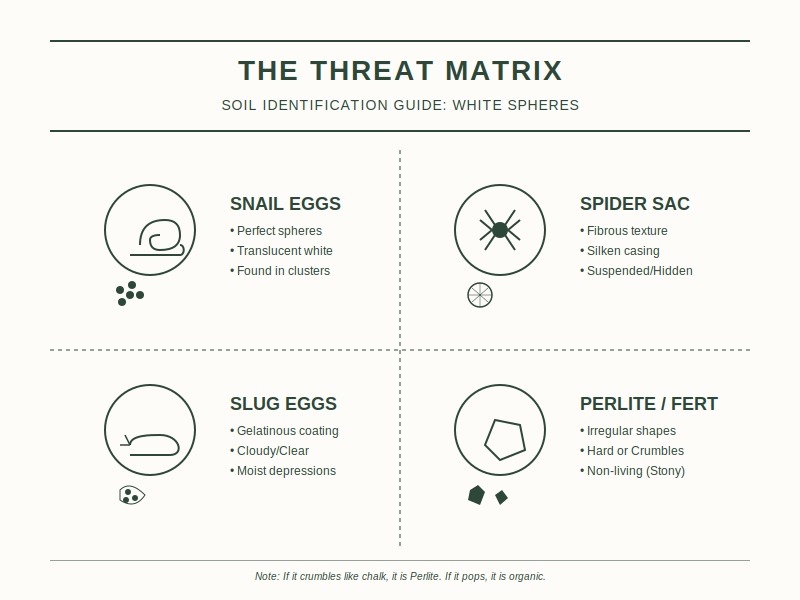
If the object is irregular, jagged, and shatters into a dry, white powder under pressure, it is perlite. Perlite is an expanded volcanic glass. It does not compress; it disintegrates. This material is a standard component in commercial potting mixes to ensure root zone aeration and prevent anaerobic conditions in heavy peat-based substrates.
2. Controlled-Release Fertilizer Prills
A perfectly spherical object that ruptures under pressure to release a clear or tinted liquid is a fertilizer prill (e.g., Osmocote). These consist of synthetic semi-permeable membranes designed for the slow release of nutrients. As the nutrient payload is exhausted, the prills may appear as translucent shells or amber spheres. These are non-biological and do not represent a pest threat, though they should be kept away from domestic animals to prevent ingestion.
3. Fungal Sclerotia Identification
Small (1-3mm), yellowish-white spheres that possess a waxy texture and smear into a paste when crushed are sclerotia. These are dense masses of mycelium representing the resting state of Leucocoprinus birnbaumii. While not a pest, their presence indicates that the substrate is retaining moisture for excessive periods. In variegated plants, this often precedes root rot. Treatment with a 3% hydrogen peroxide drench can mitigate fungal spread.
4. Biological Identification (Pest Eggs)
Objects that are soft, slightly adhesive, and rupture with a biological “pop” may be pest eggs. Snail and slug eggs are typically translucent and found in clusters. Common indoor pests like spider mites generally deposit eggs on the abaxial (underside) surface of leaves rather than in the soil. If biological eggs are confirmed, refer to an established pest eradication protocol.
Soil Moisture Gradients in Low-Humidity Environments
Standard surface moisture checks (e.g., the knuckle test) are often inaccurate during winter. Indoor heating causes rapid surface evaporation while the bottom of the container remains cold and anaerobic. These conditions favor fungal growth. If fungal sclerotia are present, increasing airflow and reducing watering frequency is required to prevent root system failure, a common issue observed in Aroid collections during periods of low light and stagnant air.
Inert Materials: Perlite and Slow-Release Fertilizer
Before initiating fungicide treatments or disposing of substrate, verify the identity of the particles. In many cases, spheres that appear to be fungal or insect-related are standard components of industrial horticulture. These materials are often more visible during winter months when soil levels settle or surface evaporation increases.
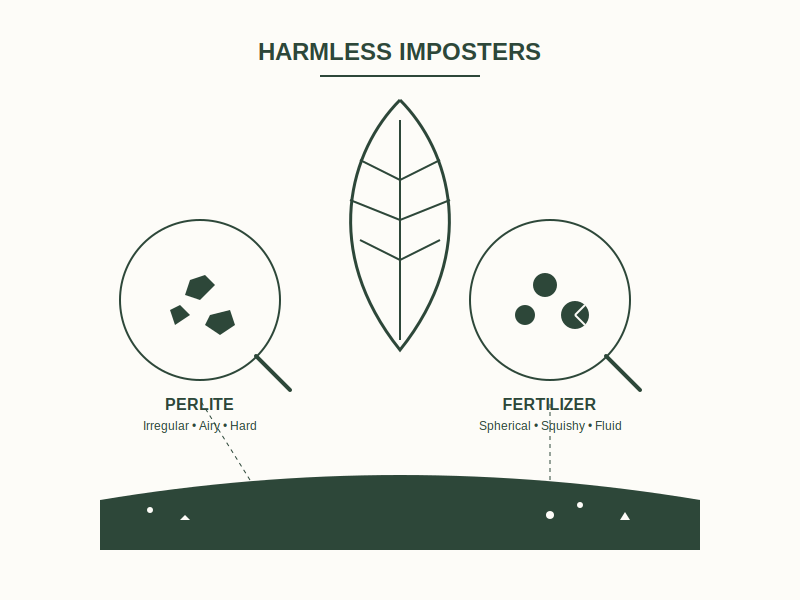
White or colored spheres in the soil are typically either structural minerals or synthetic nutrient delivery systems.
Perlite and Expanded Siliceous Rock Properties
Perlite is the most common cause of “white ball” misidentification. It is a standard additive in pre-mixed commercial soils. When perlite migrates to the surface, it can be mistaken for fungal sclerotia or large insect eggs.
Perlite is an inert volcanic rock, specifically a volcanic glass. It is processed by heating the material to approximately 1,600 degrees Fahrenheit. Trapped moisture within the structure causes it to expand, resulting in an expanded siliceous rock.
This material provides essential aeration. It creates macropores (air pockets) that prevent root suffocation when the core of the substrate remains saturated. This is particularly critical for sensitive species like the Thai Constellation, which are prone to rot in anaerobic conditions.
Identification methods for perlite: 1. The Crush Test: Perlite feels like lightweight stone and reduces to a gritty, white powder when crushed. 2. The Float Test: Perlite is buoyant. If white particles float to the surface during watering, they are likely perlite, as fungal structures and eggs typically do not exhibit this buoyancy.
Testing Slow-Release Fertilizer Prills
Spheres that are translucent yellow, green, or brown are often slow-release fertilizer prills. These are frequently confused with gastropod eggs due to their shape and liquid content.
These prills consist of concentrated liquid nutrients within a semi-permeable polymer coating. The coating reacts to temperature and moisture levels; as soil temperature increases and moisture is applied, the coating allows water to enter, dissolve the internal salts, and leach them into the root zone.
Once the nutrient supply is exhausted, the hollow polymer shell remains in the soil. These “ghost” prills contain water and will rupture when squeezed. This reaction is often misinterpreted as the crushing of a pest egg.
To differentiate fertilizer from biological eggs: – Uniformity: Fertilizer prills are perfectly spherical and uniform. Snail eggs are irregular, adhesive, and typically clustered. – The Coating: Fertilizer prills possess a distinct, plastic-like polymer coating. – The Contents: The liquid in a fertilizer prill is clear or slightly tinted with a chemical odor. Biological eggs contain milky or viscous fluid.
Management of these prills is unnecessary, though they should be monitored if domestic animals have access to the soil surface. Maintaining proper humidity levels is more critical for plant health than the presence of these synthetic shells.
Leucocoprinus Birnbaumii: Fungal Cluster Characteristics
Clusters of small, neon-yellow or creamy-white spheres found in peat-heavy substrates or near drainage holes are often sclerotia. These are frequently misidentified as spider mite eggs or other pest infestations.
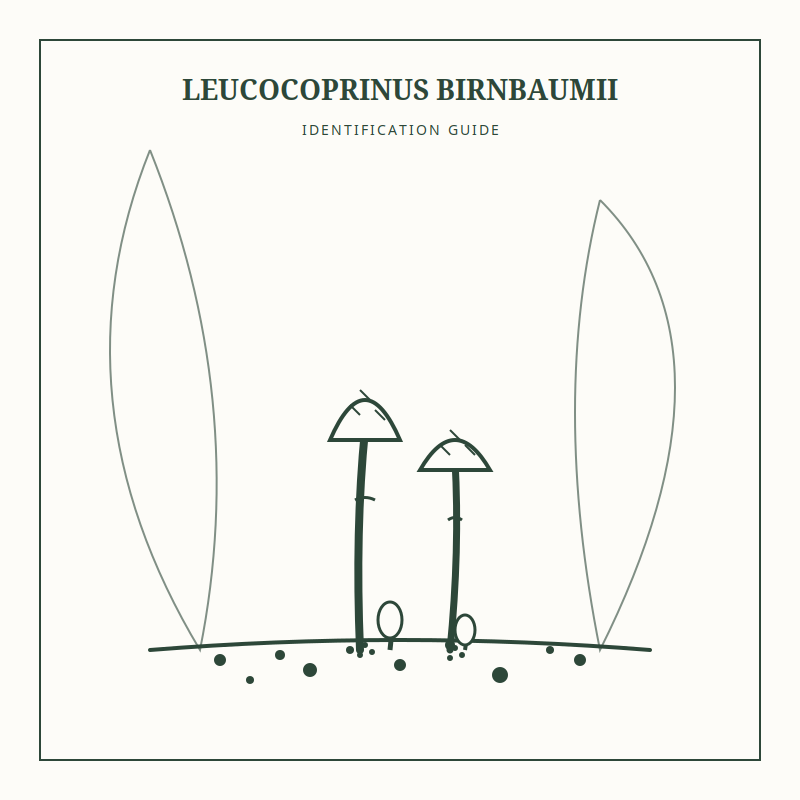
These structures belong to Leucocoprinus birnbaumii, a saprophytic fungus. They are not parasitic and do not consume living plant tissue. Instead, they facilitate potting mix decomposition by breaking down organic matter, such as peat or coco coir, into usable nutrients.
Fungal Growth Factors in Winter Micro-Climates
During winter, indoor heating creates a paradox: low ambient humidity alongside high soil moisture retention. Reduced light levels and shorter photoperiods lower the plant’s metabolic rate, leading to decreased water uptake. This results in stagnant moisture within the substrate.
This environment promotes the development of Leucocoprinus sclerotia, which serve as survival structures composed of hardened mycelium. Their presence indicates: 1. High organic matter content in the substrate. 2. Persistent high moisture levels in the lower half of the container.
Differentiating Sclerotia from Biological Eggs
Sclerotia are opaque and often appear slightly filamentous under magnification. They lack the translucency of snail or slug eggs and do not release liquid when compressed. They are strictly fungal in origin.
While the fungus itself is not harmful to the plant, its presence suggests a lack of oxygen at the root zone, which can lead to root rot in sensitive species. A 3% hydrogen peroxide drench can be used to oxygenate the soil and neutralize spores. Ceylon cinnamon may also be applied to the surface as a natural antifungal agent. Leucocoprinus is mildly toxic if ingested by domestic animals; soil surfaces should be monitored accordingly.
Identification of Snail, Slug, and Spider Eggs
Accurate biological identification is necessary to differentiate between harmless fungi and active pest infestations. Understanding the pest lifecycle allows for intervention before significant tissue damage occurs.
Gastropod Egg Clutches: Morphology and Location
Gastropod eggs (snails and slugs) appear as translucent spheres. They are typically found in clutches of 20 to 100 units, located in high-moisture areas such as the inner rim of the pot or within damp sphagnum moss.
Unlike fertilizer prills, gastropod eggs are gelatinous and flexible. Magnification may reveal embryonic development within the membrane. These pests often remain dormant in dry conditions and hatch when soil moisture increases.
Spider Mite Egg Identification
Spider mite eggs are near the limit of human visibility. They appear as minute, glistening white or translucent orbs, typically located in leaf axils or along the midrib. These are usually scattered rather than clustered in the soil. The presence of fine silk webbing alongside these spheres confirms an active infestation requiring immediate treatment.
Physical Resistance Testing for Biological Matter
Physical testing provides definitive identification: – Minerals/Fertilizer: Brittle or hard shells; release chemical-scented fluid or powder. – Fungal Sclerotia: Compressible like fungal tissue; no liquid release. – Pest Eggs: Release a viscous, gelatinous residue upon rupture.
In winter, plants exhibit reduced immune responses due to lower UV exposure, making them more susceptible to damage from hatching pests. Monitoring soil for clear, gelatinous beads is a necessary preventative measure.
Root Mealybugs: Subterranean Identification
During periods of indoor heating and low humidity, white deposits on the root ball may indicate the presence of Rhizoecus, or root mealybugs. These are subterranean pests that thrive in the warm, dry pockets of soil that form when substrate pulls away from the container walls.
Mechanisms of Root Mealybug Damage
Root mealybugs are often mistaken for mold or mineral deposits. Mold typically presents as a web-like structure, while mineral deposits are crystalline. Root mealybugs produce a powdery, waxy filament that coats the roots. This wax is hydrophobic, protecting the insect from standard topical watering treatments.
These insects excrete honeydew, which binds with soil particles to create gritty clumps. By piercing root tissue to extract sap, they facilitate root necrosis. Symptoms include foliage yellowing and signs of dehydration despite adequate soil moisture.
Winter Vulnerability Factors for Indoor Plants
Plants in metabolic slowdown during winter have lower vascular pressure and slower immune responses. Soil fissures caused by uneven drying serve as conduits for root mealybugs to migrate between adjacent containers.
Systemic Insecticide Applications
Topical treatments like neem oil are ineffective against root mealybugs due to their waxy protection and subterranean location. Systemic insecticides containing Imidacloprid or Dinotefuran are required. These are absorbed by the roots and distributed through the plant’s vascular system.
Alternatively, a bare-root reset may be performed. This involves removing all substrate, rinsing the roots with high-pressure water, dipping them in a 1:4 hydrogen peroxide solution, and repotting in sterile media. This process carries a high risk of transplant shock during winter months.
Eradication Protocols for Soil Pathogens
Winter conditions often lead to soil stagnation. Fruiting mushrooms or visible mold are indicators of micro-climate failure and excessive moisture retention at the root zone.

Hydrogen Peroxide Drench: Concentration and Application
To treat soil-borne pathogens, a 3% hydrogen peroxide drench is recommended. Mix one part peroxide with three parts room-temperature filtered water. Avoid cold water to prevent root shock. The resulting oxidative reaction neutralizes anaerobic bacteria and fungal spores. Following the drench, a surface application of Ceylon cinnamon can serve as a supplemental fungicide due to its cinnamaldehyde content.
Fungus Gnat Management: Physical and Biological Controls
Fungus gnat management requires a multi-stage approach:
- Diatomaceous Earth (DE): This material consists of fossilized diatoms with sharp silica edges that mechanically damage insect exoskeletons. It must be applied to dry soil to remain effective.
- Beneficial Nematodes (Steinernema feltiae): These microscopic roundworms are watered into the soil to parasitize gnat larvae. This biological control is more effective than neem oil for heavy infestations.
Technical Limitations of Neem Oil
Neem oil is primarily a preventative leaf shine. In winter, its use should be limited as it can obstruct stomata and impair gas exchange in plants already struggling with low light. If applied, leaves should be wiped clean after 48 hours.
Preventative Soil Hygiene and Airflow Management
Preventing soil-borne issues requires treating the container as a closed biological system. Management of relative humidity and substrate composition is essential.
Substrate Sterilization and Composition
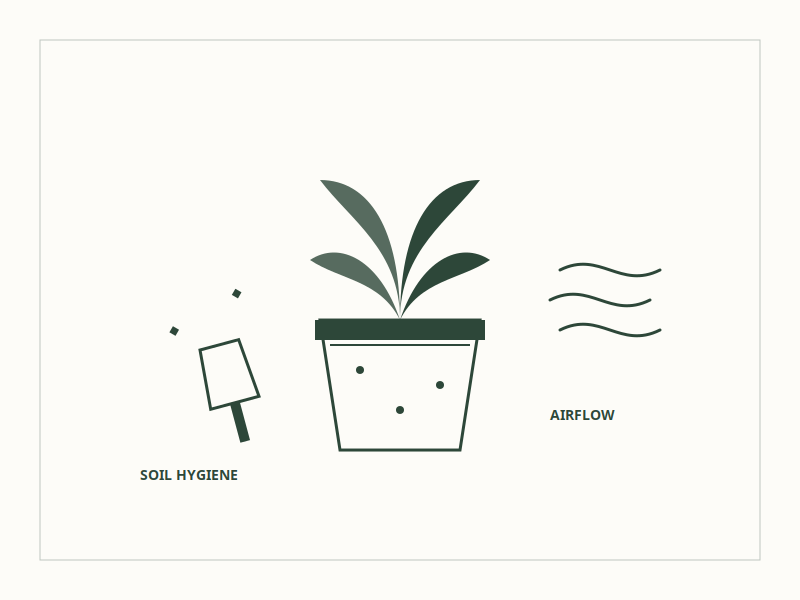
Use sterile potting media to avoid introducing larvae or spores. A high-quality, heat-treated coco coir or peat base is preferred. Substrate aeration is achieved by incorporating orchid bark and coarse perlite or pumice (Aroid mix). This creates macro-pores that facilitate gas exchange and prevent the development of anaerobic bacteria.
Capillary Action and Bottom Watering Techniques
Bottom watering prevents surface-level fungal and pest issues. By allowing capillary action to draw moisture from a tray into the root zone, the upper layers of the substrate remain dry. This disrupts the lifecycle of fungus gnats and prevents the fruiting of Leucocoprinus.
Airflow and Boundary Layer Management
Continuous airflow via oscillating fans prevents the formation of humid boundary layers around foliage and soil surfaces. Additionally, a 14-day quarantine protocol for new plants is necessary to monitor for pests and pathogens before they are introduced to a broader collection. Proper drainage and substrate management are the primary defenses against winter-related plant decline.