This article was researched and reviewed by Leo, an indoor plant specialist.
The Node Fallacy: Biological Requirements for Rooting
During winter months, plant propagation often fails due to environmental conditions and improper technique. Maintaining a consistent 55% humidity level is a standard practice for species like the [Thai Constellation](https://www.plantgrowthguide.com/thai-constellation-monstera-care/) to prevent leaf spot. A frequent cause of failure is the use of “blind sticks,” which are stem segments that lack the necessary biological structures to produce new growth.
Guide Overview
- The Node Fallacy: Biological Requirements for Rooting
- The Biology of Undifferentiated Cells
- Identifying the Axillary Bud
- Pathogen Overload in Water Propagations
- The Dissolved Oxygen Crisis
- The Auxin Deficit and Root Initiation
- The Pothos Co-Propagation Method
- Light and Temperature: Metabolic Requirements
- The Heat Mat Necessity
- Pest Interference: Thrips and Mites
- Quarantine Protocols for Cuttings
- The Callus Phase and Vascular Protection
- The Hoya and Succulent Protocol
- Water Quality: Chlorine, Fluoride, and Osmotic Stress
- The Hierarchy of Water for Propagation
If a cutting fails to produce roots after several weeks in water, it is likely because the specimen lacks the required biological equipment. Successful propagation of species like [Monstera deliciosa](https://www.plantgrowthguide.com/how-to-prune-monstera-too-tall/) requires meristematic tissue. A segment of stem without this tissue cannot develop into a new plant.
The Biology of Undifferentiated Cells
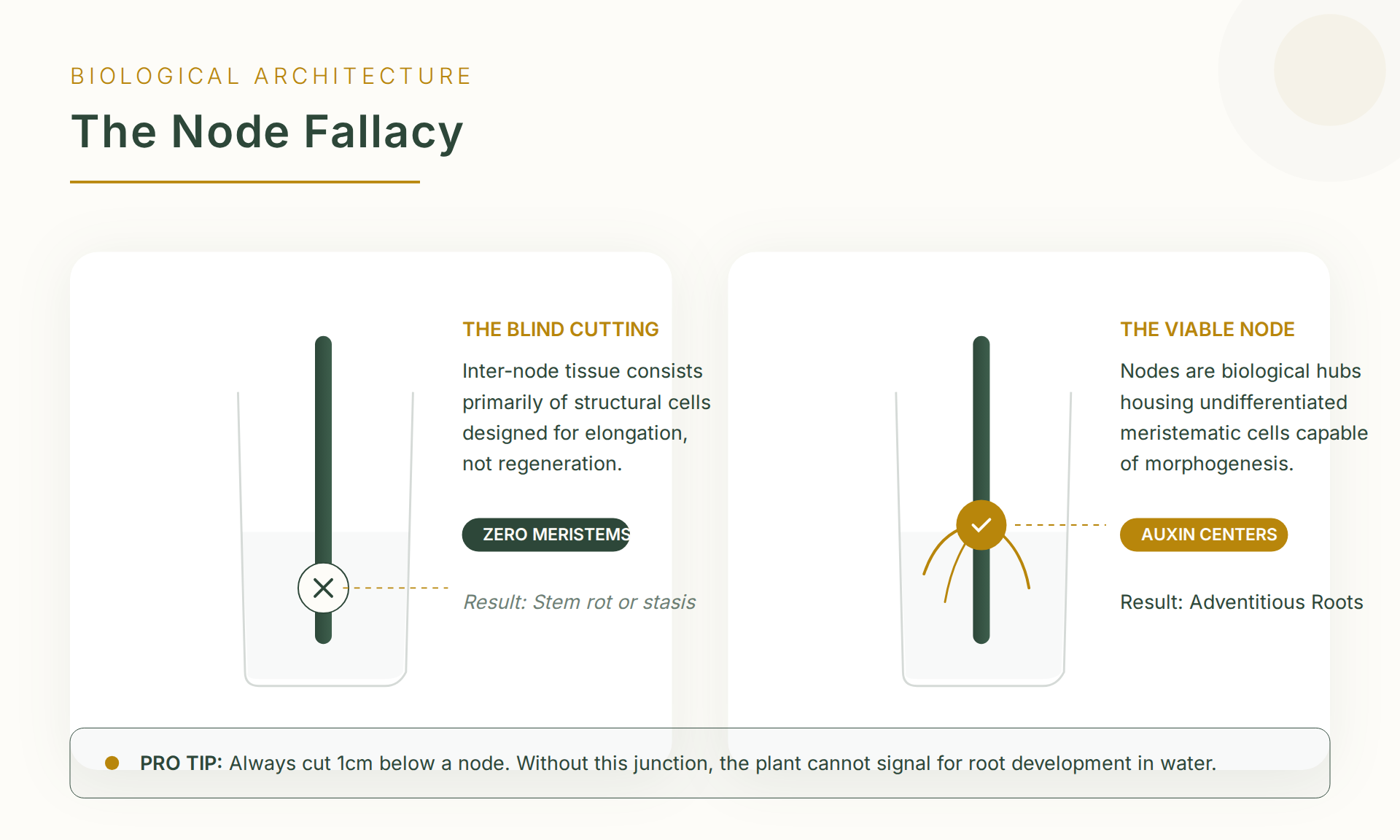
Plants contain zones of undifferentiated cells known as apical and lateral meristems. In common houseplants such as [Pothos](https://www.plantgrowthguide.com/?p=1307) or Philodendrons, these cells are concentrated in the nodes. The node is the point where a leaf attaches to the stem. This is the specific location where the plant produces adventitious roots, which are roots that emerge from non-root tissue.
An internode is the space between two nodes. This tissue lacks the undifferentiated cells required to transition from stem growth to root growth. If an internodal segment is placed in water, it will absorb water via osmosis until the tissue eventually undergoes cellular collapse and decomposes.
Identifying the Axillary Bud
To ensure successful propagation, the axillary bud must be present. This is a small protrusion located just above the node and serves as the site for new growth. When taking a cutting, include the bud and the surrounding node. It is recommended to cut approximately 0.5 inches below the node. Leaving excessive internodal tissue increases the surface area vulnerable to Pythium and other pathogens.
Pathogen Overload in Water Propagations
The presence of a slimy, odorous coating on the submerged stem indicates bacterial soft rot or a fungal infection, often caused by Pythium.
In indoor environments with active heating, water in propagation vessels can become stagnant and low in oxygen. When oxygen levels decrease—a condition known as stagnant water hypoxia—plant cells die due to a lack of respiration. These dying cells release sugars that facilitate the growth of anaerobic bacteria.
The Dissolved Oxygen Crisis
Root formation requires oxygen. Dissolved oxygen levels determine whether a cutting develops roots or undergoes rot. Stagnant water quickly becomes depleted of oxygen. Regular water changes are necessary to maintain adequate levels.
As water temperature increases, its ability to hold dissolved oxygen decreases. Adding activated charcoal to propagation vessels can help by absorbing toxins and metabolic waste products that fuel pathogen growth. If the water becomes cloudy, the stem should be rinsed, the affected tissue removed, and the cutting placed in fresh, oxygenated water.
The Auxin Deficit and Root Initiation
A cutting with a node and clean water may still fail to root due to an auxin deficit. This is a hormonal imbalance that prevents the initiation of root tissue.
Auxins, specifically Indole-3-butyric acid (IBA), are the hormones that signal a plant to produce roots. These are typically produced in the apical meristem and transported downward. Severing a cutting interrupts this supply. If the cutting lacks sufficient stored auxins, it cannot complete the cellular transition required for root development.
The Pothos Co-Propagation Method
Pothos (Epipremnum aureum) produce high concentrations of auxins and Salicylic acid, the latter of which assists in the plant’s immune response.
Placing Pothos cuttings in the same vessel as a difficult-to-root species, such as a Variegated Monstera or Hoya, can be effective. The Pothos releases auxins into the water, which are then absorbed by the other cutting, stimulating root growth. While cytokinins promote foliage, auxins are the primary requirement during the propagation phase.
Light and Temperature: Metabolic Requirements
Propagation is a metabolically intensive process. The cutting must generate new root systems using energy stored in its leaves and stem. During winter, low light levels often result in propagation failure.
Insufficient PAR (Photosynthetically Active Radiation) prevents the plant from performing enough photosynthesis to fuel root construction. This leads to a state of metabolic inactivity, making the cutting more susceptible to pests and decay.
The Heat Mat Necessity
Metabolic rates are temperature-dependent. If the ambient temperature is near 60°F (15°C), the metabolic rate of the cutting may be too slow to prevent tissue decay. Utilizing a propagation heat mat set to 75°F (24°C) is recommended.
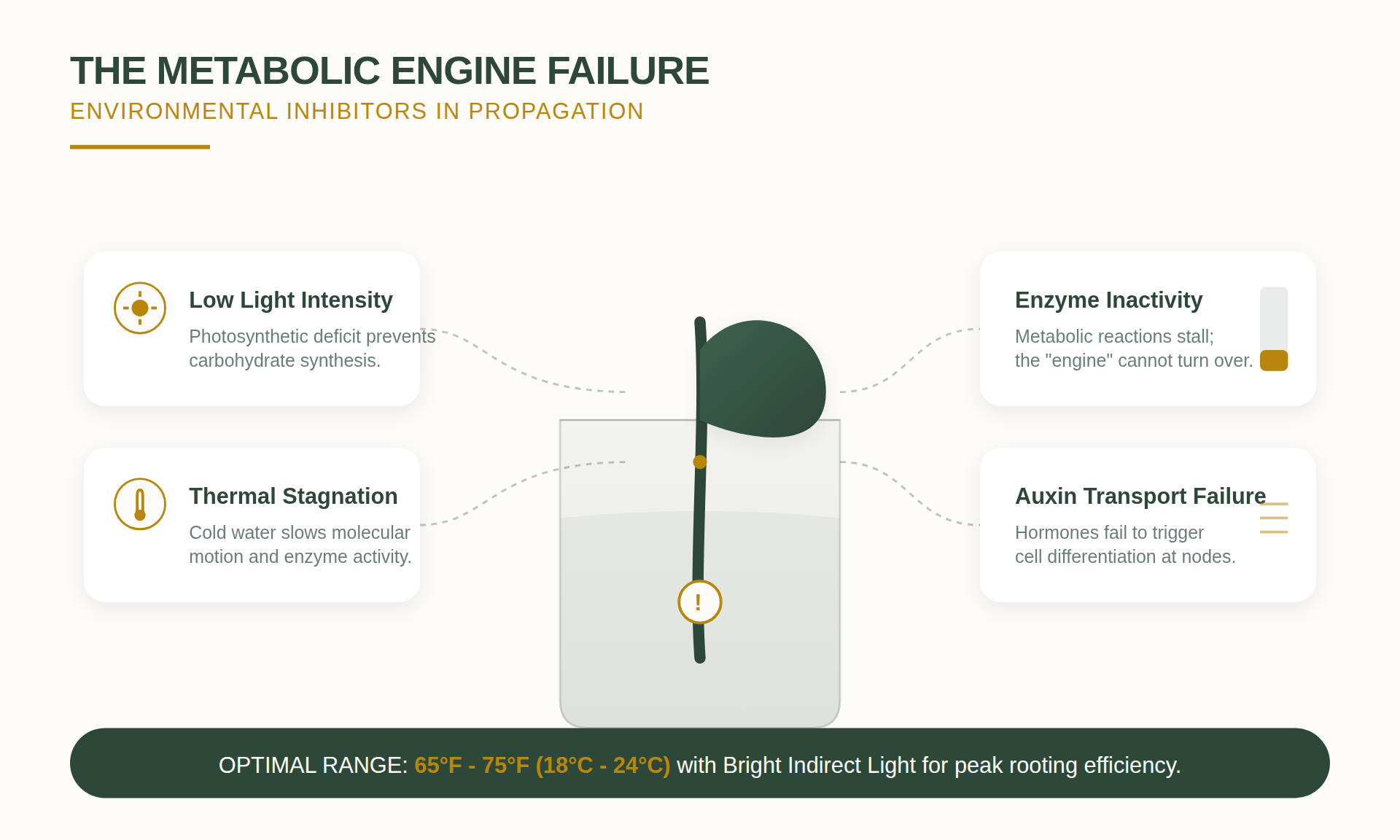
Increased temperature accelerates cell division at the node. However, because warm water holds less oxygen, monitoring is required. Using reflective boards behind the vessels can increase light intensity by redirecting photons into the plant canopy. If optimal light and temperature cannot be maintained, propagation should be deferred until spring.
Pest Interference: Thrips and Mites
Yellowing leaves on a cutting in water may indicate a pest infestation. Spider mites and Thrips larvae are common issues in propagation environments.
A cutting is vulnerable because it cannot yet efficiently replace moisture or nutrients. Sap-sucking insects deplete the sugars and moisture required for root development. Spider mites thrive in the low humidity and warm air typical of heated indoor spaces, often damaging the cutting before webbing becomes visible.
Quarantine Protocols for Cuttings
All cuttings should be inspected before being placed in water. If pests are detected, a diluted systemic insecticide or neem-based wash may be used. Note that excessive chemical application can inhibit the rooting process.
If a cutting loses lower leaves progressively, it should be checked for microscopic pests. These organisms divert the plant’s limited energy from growth to defense and repair.
The Callus Phase and Vascular Protection
Placing a fresh cutting directly into water can expose the vascular tissue to pathogens. Callus formation is the process where parenchyma cells proliferate over the cut surface, creating a protective barrier of suberized tissue. This barrier prevents immediate vascular collapse.
The Hoya and Succulent Protocol
For species such as Hoya or succulents, cuttings should air-dry on a paper towel for 24 to 48 hours before being placed in water. The cut end should be firm and dry to the touch. This prevents the “wicking” effect, where water containing bacteria is drawn directly into the center of the stem.
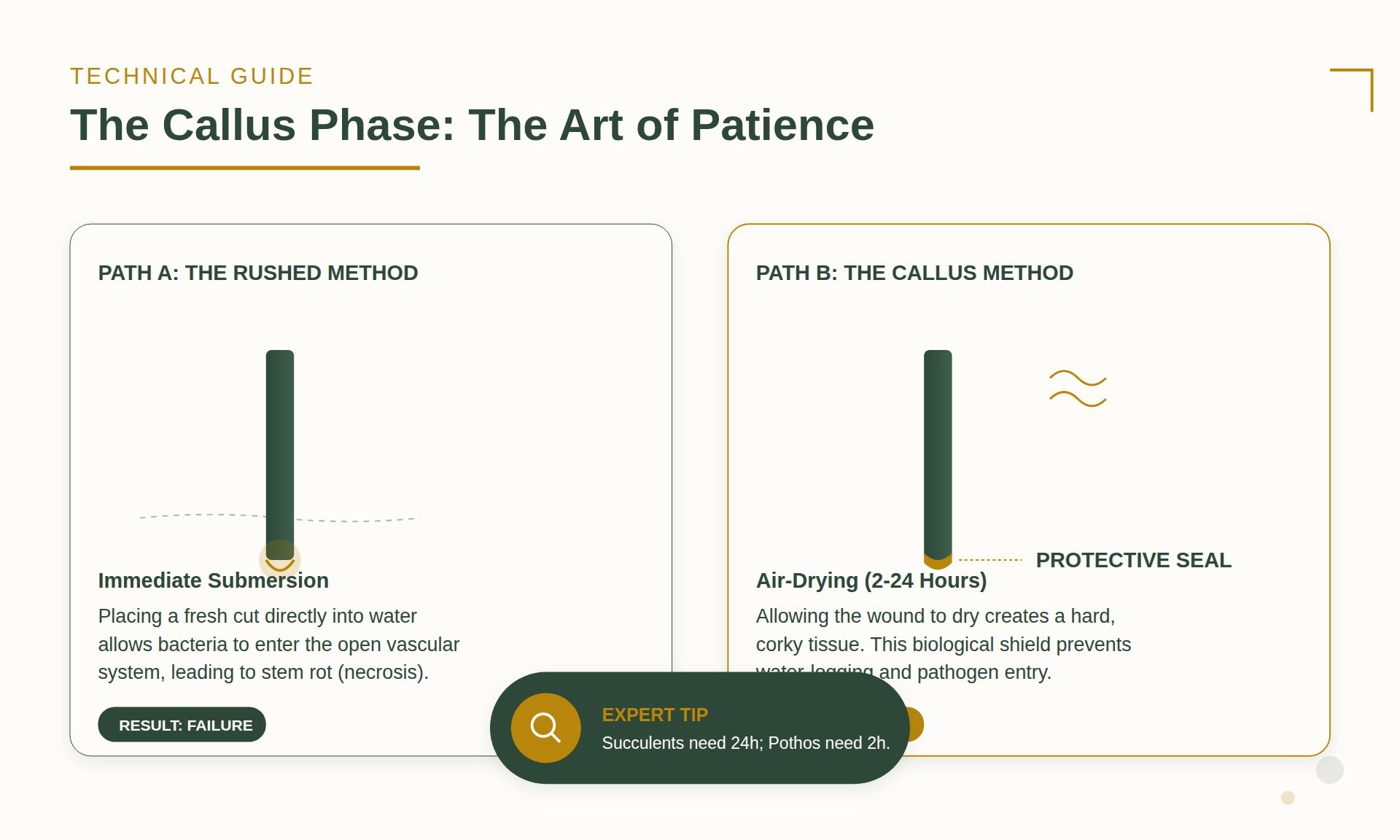
Even delicate Aroids benefit from at least two hours of air-drying. A cutting without roots cannot utilize water efficiently, so allowing it to develop a protective callus is more beneficial than immediate submersion.
Water Quality: Chlorine, Fluoride, and Osmotic Stress
Municipal tap water often contains chlorine or chloramine. These chemicals can be toxic to the undifferentiated cells of a developing root tip. Additionally, fluoride can accumulate in the leaf tips of certain plants, such as Dracaena, causing necrosis.
Osmotic pressure is another factor. Hard water with high mineral content can inhibit the movement of water into the plant. In some cases, minerals may accumulate around the node, creating a physical barrier that blocks root emergence.
The Hierarchy of Water for Propagation
For optimal results, consider the following water sources:
1. Rainwater: Slightly acidic and contains trace nitrogen.
2. Reverse Osmosis (RO) Water: Free of contaminants; may require a minimal amount of liquid seaweed for micronutrients.
3. Distilled Water: Neutral, though prolonged use may leach minerals from the plant.
4. De-chlorinated Tap Water: Letting tap water sit for 24 hours allows chlorine to dissipate, though this does not affect chloramine.
Using RO water reduces chemical stress on the plant, allowing energy to be directed toward root development. Successful propagation involves mitigating risks such as rot and pests while providing adequate light and ensuring the presence of a node.