This article was researched and reviewed by Leo, an indoor plant specialist.
# Technical Analysis of Reduced Leaf Morphology: 5 Causes for Small Monstera GrowthWhen a Monstera deliciosa produces new foliage that is significantly smaller than previous growth, it indicates a shift in resource allocation. While mature specimens are capable of producing large, multi-fenestrated leaves, environmental stressors can trigger a metabolic retreat. In this state, the plant prioritizes survival over the high energy cost of expansive leaf production. Understanding the botanical mechanics behind this downsizing is essential for restoring mature growth patterns.
Guide Overview
- The Light Deficit: Why Your Monstera is Conserving Energy
- The Fenestration Trade-off
- Measuring Foot Candles vs. Human Eyesight
- Etiolation: The Warning Sign of Leggy Growth
- How Light Intensity Dictates Leaf Surface Area
- Thigmotropism: Why Vertical Support is Non-Negotiable
- The Hemiepiphyte Biological Blueprint
- Hormonal Shifts Triggered by Physical Contact
- Aerial Roots: More Than Just Water Absorbers
- Moss Pole vs. Trellis: Which Forces Maturity?
- Metabolic Stunting: The Hidden Cost of Nutrient Deficiency
- Nitrogen’s Role in Leaf Expansion
- The Danger of Salt Buildup in Indoor Pots
- Micronutrients: The Unsung Heroes of Fenestration
- Seasonal Feeding Schedules for Tropical Aroids
- Root Health and Turgor Pressure: The Mechanics of Unfurling
- Root-Bound Suffocation vs. Potting Up
- The Silent Killer: Root Rot and Nutrient Transport
- Turgor Pressure: The Engine of Leaf Expansion
- Oxygenation in the Rhizosphere
- Juvenile Reversion: Why Your Plant is Going Backward
- Stress-Induced Reversion Cycles
- The Impact of Extreme Temperature Fluctuations
- Humidity and the Unfurling Process
- Pest Infestations: Thrips and Growth Stunting
- The Recovery Protocol: How to Force Giant Foliage
- The ‘Chop and Prop’ Strategy for Rejuvenation
- Optimizing the Wet-to-Dry Cycle
- Strategic Pruning to Redirect Energy
- Long-term Maintenance for Monster Growth
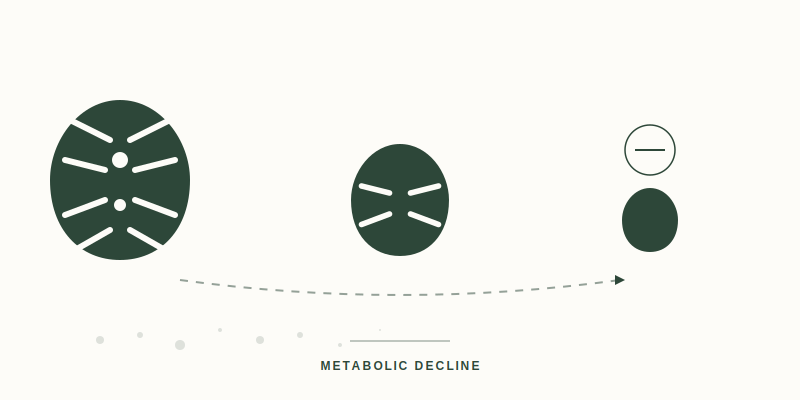
Leaf size reduction is a quantifiable physiological response. Based on botanical observations, plants calculate the cost of leaf production against available resources. When a Monstera produces smaller leaves, it is in a state of metabolic retreat, downsizing its architecture because it can no longer sustain the resource requirements of larger foliage. To reverse this, one must apply botanical engineering principles to the growing environment.
The Light Deficit: Why Your Monstera is Conserving Energy
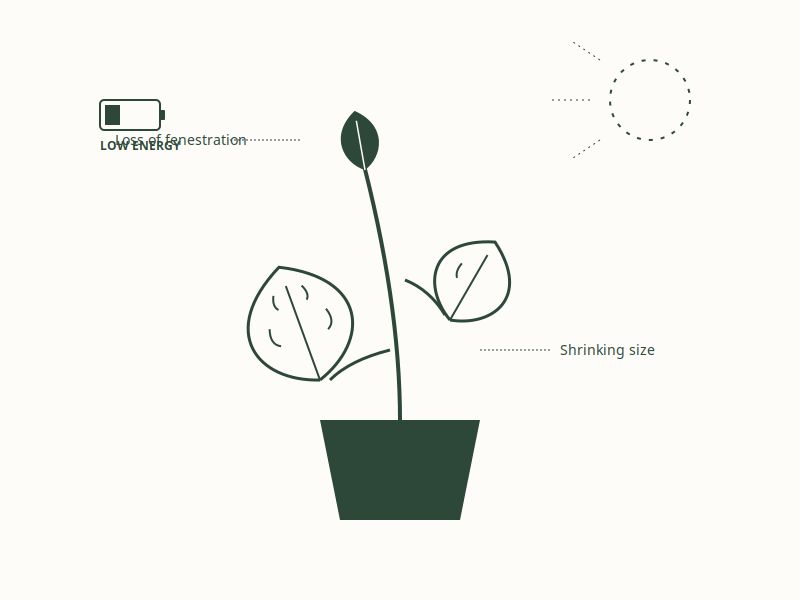
Human vision is an unreliable metric for assessing light intensity due to pupil dilation. A Monstera processes light as the primary energy source for photosynthesis. When photon intake decreases, the plant undergoes a strategic architectural downsize to match its reduced energy budget.
The Fenestration Trade-off
A large, fenestrated leaf requires significant biological investment. Producing these perforations—which facilitate wind passage and light penetration in the wild—requires a surplus of ATP (adenosine triphosphate). ATP is generated during the light-dependent reactions of photosynthesis.
When light levels fall below the “compensation point”—the threshold where energy production equals energy consumption—the plant enters survival mode. It ceases investment in the cellular machinery required for fenestrations and large surface areas. The resulting leaves are small, solid, and heart-shaped, requiring less nitrogen, water, and energy to maintain. Smaller leaves are a direct indicator of an energy deficit.
Measuring Foot Candles vs. Human Eyesight
Accurate light measurement requires a dedicated light meter or a calibrated sensor application. Indoor environments, particularly in northern latitudes or during winter, often provide light levels that fall short of the requirements for mature growth.
A Monstera deliciosa requires consistent, high-intensity light to maintain and increase leaf size. Low-light environments, such as hallways or corners away from windows, result in gradual starvation. Supplemental lighting may be necessary to counteract the inverse square law of light, which dictates that light intensity decreases exponentially with distance from the source. Detailed specifications can be found in the Definitive Grow Light Distance Guide for Every Plant.
Etiolation: The Warning Sign of Leggy Growth
Etiolation typically precedes leaf shrinkage. This is a physiological response where the plant elongates its internodes (the space between leaves) to reach for a higher light source. This process consumes remaining energy reserves. When these reserves are depleted without finding adequate light, subsequent leaves will be significantly smaller, creating a cycle of diminishing returns.
How Light Intensity Dictates Leaf Surface Area
Light intensity regulates the balance of auxins and cytokinins. High light intensity inhibits excessive cell elongation (preventing etiolation) while stimulating the lateral expansion of the leaf blade. In low light, auxins remain concentrated in the apical meristem, prioritizing vertical height over leaf width. Saturating the photoreceptors is necessary to trigger lateral expansion.
Thigmotropism: Why Vertical Support is Non-Negotiable
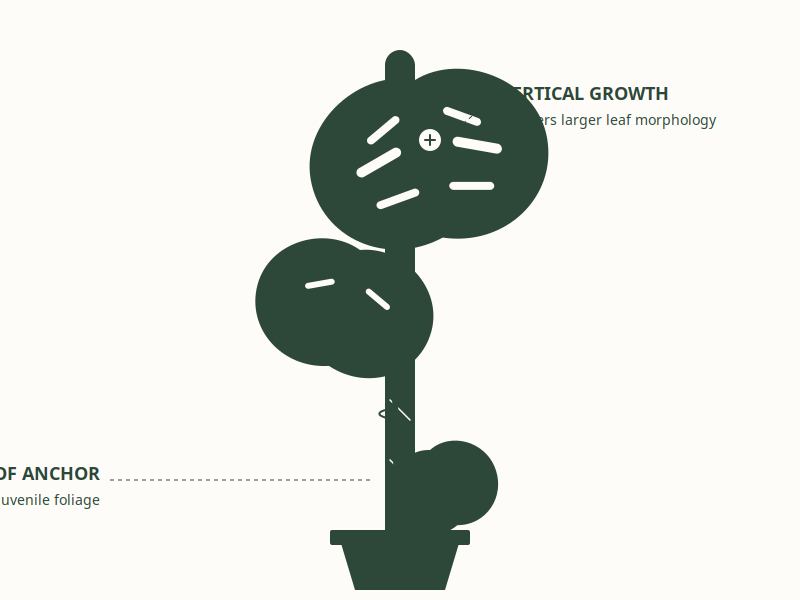
Vertical support, such as a moss pole, is a biological requirement for Monstera deliciosa rather than an aesthetic choice.
The Hemiepiphyte Biological Blueprint
As a hemiepiphyte, Monstera deliciosa begins its life cycle on the forest floor and grows toward shadows to find tree trunks. Upon establishing contact with a vertical surface, the plant transitions from a “searching” phase to a “climbing” phase.
Horizontal growth on a floor or flat surface prevents the plant from producing mature foliage. In its natural habitat, horizontal growth is a juvenile state. Climbing triggers the transition to adult morphology.
Hormonal Shifts Triggered by Physical Contact
Thigmotropism is the plant’s physiological response to mechanical stimuli. When aerial roots make firm contact with a stable, moist substrate, the plant receives a signal that triggers a surge in gibberellins. These hormones are responsible for cell division and leaf expansion.
Without this physical confirmation of vertical stability, the plant remains in a juvenile stage with small leaves. Providing a pole is necessary to signal the plant to initiate mature growth. For plants that have already become leggy due to lack of support, refer to How to Prune a Monstera Too Tall: The 5-Step Reset.
Aerial Roots: More Than Just Water Absorbers
Aerial roots function as structural sensors. They assess the stability of the climbing surface. If these roots are directed into a moist substrate or moss pole, they signal the apical meristem to initiate the production of larger leaves. Cutting these roots removes the plant’s ability to sense stability and reduces its potential for mature growth.
Moss Pole vs. Trellis: Which Forces Maturity?
While a trellis provides physical support, a moss pole acts as a rooting medium. When aerial roots penetrate a moss pole, they create a secondary vascular system. This allows for the direct transport of water and nutrients to the upper leaves, reducing hydraulic resistance and facilitating larger leaf expansion.
Metabolic Stunting: The Hidden Cost of Nutrient Deficiency
Large leaves have high metabolic costs. If essential nutrients are unavailable, the plant cannot construct the cellular scaffolding required for expansive growth. Unlike some temperate species, tropical aroids do not have a true dormancy period; they simply slow down when resources are scarce.
Nitrogen’s Role in Leaf Expansion
Nitrogen is a fundamental component of chlorophyll and proteins. It is required for the production of Rubisco, the enzyme responsible for CO2 fixation during photosynthesis. In nitrogen-deficient conditions, the plant will relocate nitrogen from older foliage to new growth (nutrient mobility). However, this relocated nitrogen is often insufficient to match the dimensions of previous leaves, resulting in stunted growth.
The Danger of Salt Buildup in Indoor Pots
In indoor environments with high evaporation rates, mineral salts from tap water and fertilizers can accumulate in the soil. This creates an osmotic imbalance, leading to “physiological drought,” where roots cannot effectively absorb water. To minimize transpiration and water loss, the plant produces smaller leaves with fewer stomata. Flushing the soil with distilled or deionized water every few months is recommended to reset the osmotic balance. For soil recovery techniques, see Save Your Overwatered Snake Plant.
Micronutrients: The Unsung Heroes of Fenestration
Beyond N-P-K, micronutrients like Magnesium and Molybdenum are essential. Magnesium is the central atom in the chlorophyll molecule. Deficiency leads to reduced photosynthetic efficiency and pale, small leaves. Seaweed-based supplements can provide a full spectrum of trace elements often absent in synthetic fertilizers.
Seasonal Feeding Schedules for Tropical Aroids
If a Monstera is provided with consistent light and warmth during winter, it will continue to grow and require nutrients. Fertilization should continue at a reduced strength (e.g., 50%) during periods of lower light to prevent “shrinking leaf” syndrome in the subsequent growing season.
Root Health and Turgor Pressure: The Mechanics of Unfurling
Leaf expansion is driven by turgor pressure—the internal hydraulic pressure within plant cells. A compromised root system prevents the plant from generating the pressure needed to expand a leaf to its full potential before the tissues lignify.
Root-Bound Suffocation vs. Potting Up
While Monsteras can tolerate slightly constricted roots, a severely root-bound state inhibits the development of new “feeder roots.” These high-surface-area roots are responsible for the majority of nutrient and water uptake. Older roots eventually undergo suberization, becoming waterproof and less efficient. A lack of young feeder roots reduces the hydraulic pressure available for leaf expansion.
The Silent Killer: Root Rot and Nutrient Transport
Root rot severs the plant’s vascular connection to the soil. Even if the soil is wet, the plant cannot transport water to the growth tip. This results in the production of smaller leaves that the diminished root system can realistically support.
Turgor Pressure: The Engine of Leaf Expansion
New leaves are soft and rely on water intake to stretch the cell walls. Low humidity can cause the leaf edges to dry and adhere to the sheath, preventing full expansion. Maintaining humidity levels above 50% during the unfurling process is critical for preventing deformed or stunted growth.
Oxygenation in the Rhizosphere
Roots require oxygen for cellular respiration to power nutrient uptake. Compacted, heavy soils exclude oxygen. A “chunky” aroid mix—comprising orchid bark, perlite, horticultural charcoal, and coco coir—ensures necessary air pockets. Oxygenated roots are more efficient at facilitating large-scale foliage growth.
Juvenile Reversion: Why Your Plant is Going Backward
Reversion occurs when a mature Monstera produces juvenile, non-fenestrated leaves. This is typically a stress response to environmental conditions that are insufficient to maintain adult foliage.
Stress-Induced Reversion Cycles
Environmental shocks, such as relocation or severe pest infestations, can trigger reversion. The plant scales back its morphological complexity until environmental stability is restored. It may take several growth cycles for the plant to return to mature leaf production after a significant stress event.
The Impact of Extreme Temperature Fluctuations
Monsteras require stable tropical temperatures. Exposure to drafts or heat vents causes metabolic stress as the plant attempts to regulate its internal temperature. This consumes energy that would otherwise be directed toward leaf expansion, often resulting in reversion.
Humidity and the Unfurling Process
Low humidity can cause a leaf to become stuck in its sheath. If the cells harden before the leaf fully unfurls, the resulting foliage will be mangled and smaller than its potential. This is frequently observed in variegated cultivars like ‘Thai Constellation,’ as discussed in Stop Killing Your Big-Box Monstera Thai Constellation.
Pest Infestations: Thrips and Growth Stunting
Thrips target developing tissue within the leaf sheath. They inject toxins that cause cell distortion and necrosis. This damage results in shriveled leaves that fail to reach full size. Treatment with systemic granules and spinosad is necessary upon detection of silver scarring or black fecal specks.
The Recovery Protocol: How to Force Giant Foliage
Restoring large leaf growth requires environmental optimization and, in some cases, structural intervention.
The ‘Chop and Prop’ Strategy for Rejuvenation
For specimens with long, leggy stems and small terminal leaves, a “chop and prop” reset is effective. Removing the top cutting (ensuring 1-2 nodes) and propagating it allows for a fresh start on a moss pole. Because the top cutting retains the hormonal maturity of the parent plant, it will return to producing large leaves faster than a seedling, provided it receives adequate light and support.
Optimizing the Wet-to-Dry Cycle
Monsteras require a consistent wet-to-dry cycle. Allowing the top two inches of soil to dry before watering encourages deep root growth, providing a stronger foundation for large foliage. For more resilient species, see Massive Low-Maintenance Indoor Plants.
Strategic Pruning to Redirect Energy
Removing unproductive, yellowing lower leaves can redirect energy to the apical meristem. These leaves often act as “sinks,” consuming more energy through respiration than they produce via photosynthesis. Pruning allows the plant to allocate ATP and nutrients toward new, larger growth.
Long-term Maintenance for Monster Growth
Consistency in environmental parameters is the primary driver of growth: 1. Light: Ensure high-intensity light sufficient to cast a distinct shadow. 2. Support: Utilize a moist moss pole to engage thigmotropism and secondary vascular systems. 3. Nutrition: Apply a complete fertilizer including micronutrients. 4. Cleanliness: Regularly remove dust from leaf surfaces to maintain photosynthetic efficiency and gas exchange.
By adhering to these technical requirements, the plant will allocate resources toward mature, fenestrated foliage. Growth size is a direct reflection of resource availability and environmental stability.