This article was researched and reviewed by Leo, an indoor plant specialist.
The Limitations of Calendar-Based Watering Schedules
Automated notifications and calendar invites for watering plants are common. However, these schedules do not account for the biological requirements of plants, which are governed by metabolic demand and environmental conditions. Plants function as biological systems regulated by the relationship between metabolic demand and environmental pressure. Watering on a fixed schedule ignores the plant’s primary mechanism for water regulation: transpiration.
Guide Overview
- The Limitations of Calendar-Based Watering Schedules
- Environmental Variables and Micro-Climates
- Substrate Physics: How Soil Choice Dictates Watering Frequency
- The Science of Pore Space
- Assessment Methods: The Weight Method
- Observation-Based Maintenance Protocols
- The Observation Checklist
- Seasonal Metabolic Shifts: The Winter Watering Trap
- Remediation of Root Rot
- The Rescue Steps
Transpiration is the process by which water moves through a plant and evaporates from aerial parts, such as leaves, stems, and flowers. As water evaporates through the stomata—microscopic pores on the leaf surface—it creates negative pressure that draws water from the roots. This mechanism transports essential minerals and maintains turgor pressure. In low-light environments or during winter months, stomata function is reduced. Photosynthetic demand is low. Adding water when demand is low leads to soil saturation and root system hypoxia.
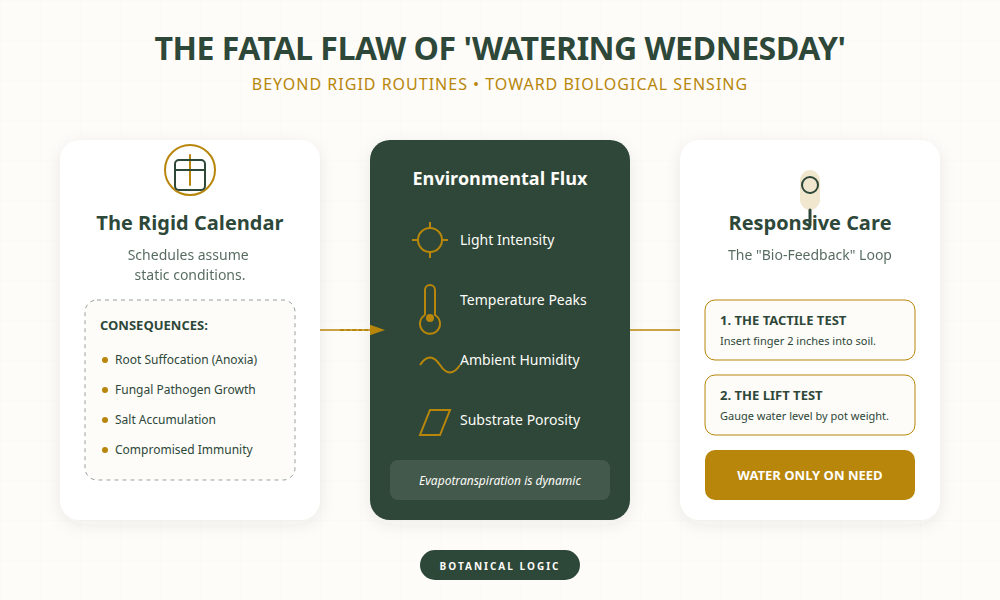
The metabolic rate determines water requirements. During periods of high light intensity and warmth, plants have a high evaporative load and require more frequent watering. Conversely, when solar angles are low and light is limited, the same plant requires significantly less water. Rigid schedules prioritize surface soil appearance over metabolic throughput, which is inconsistent with biological and physical requirements.
Environmental Variables and Micro-Climates
Indoor environments are not uniform; they consist of various micro-climates. Factors such as proximity to heat sources or drafty windows significantly alter the water requirements of individual plants, even those of the same species. A plant near a radiator will have different requirements than one near a window with a draft.
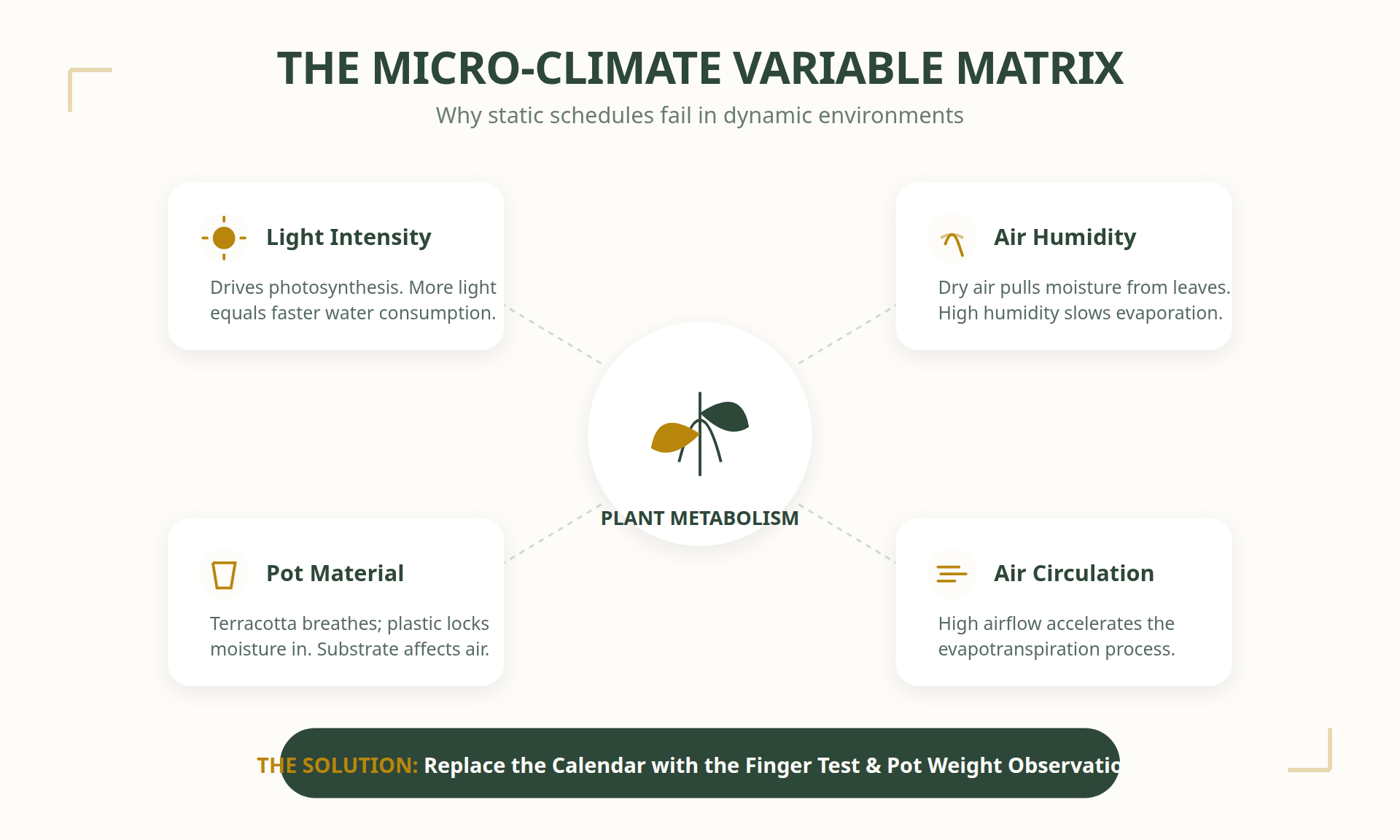
HVAC systems influence airflow and humidity. Forced air heating reduces ambient moisture. Plants in the path of moving air experience higher rates of evapotranspiration as the air removes the boundary layer of humidity around the leaves, increasing the rate of water uptake. Conversely, plants in areas with stagnant air and lower light have lower water requirements.
Evaporative cooling occurs when water evaporates from the surface of porous containers like terracotta, lowering the temperature of the root ball. In cold environments, wet, cold soil reduces root activity and increases susceptibility to fungal pathogens. Light intensity also varies by distance from windows, directly affecting photosynthetic demand for water. A plant three feet from a window receives fewer photons than one on the sill, reducing its water requirements. These variables make universal watering schedules inaccurate.
Substrate Physics: How Soil Choice Dictates Watering Frequency
Substrate choice is a critical factor in plant health. Peat-based potting soils often have high water retention but can become compacted over time. This compaction reduces soil pore space—the air pockets between particles. While the surface may appear dry, the lower levels of the substrate can remain saturated and anaerobic.
Roots require oxygen for cellular respiration. Substrates incorporating large-grade perlite, orchid bark, and pumice facilitate gas exchange. These materials create a structure that prioritizes the movement of air and water.
The Science of Pore Space
In a coarse substrate, water moves through macropores via gravity, leaving a film of moisture on organic components while maintaining air pockets. In contrast, dense peat-based mixes retain water and displace oxygen. Lack of oxygen leads to root death and the proliferation of anaerobic bacteria, resulting in root rot. Substrate density dictates the margin for error in watering frequency; dense substrates require more precise management of fluid dynamics and gas exchange.
Assessment Methods: The Weight Method
The common practice of checking the top two inches of soil is often insufficient for larger containers. This method does not account for the moisture gradient at the bottom of the pot, where sensitive feeder roots are often located.
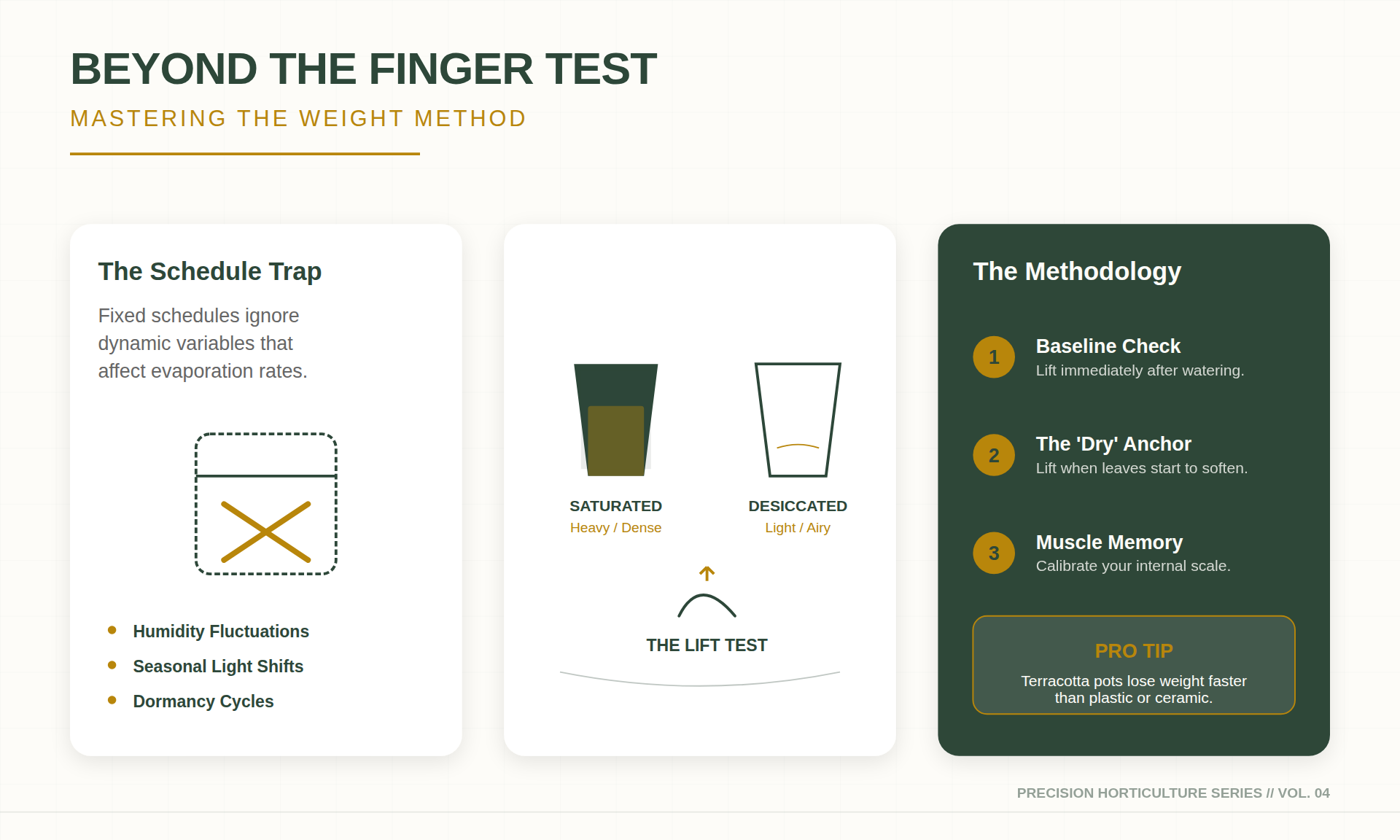
The weight method utilizes the difference between wet and dry soil mass. A saturated root ball is significantly heavier than a dry one. Lifting or tilting the pot allows for an assessment of the entire root system’s moisture level. This method provides a more accurate representation of hydration than surface testing.
This method prevents overwatering when the surface is dry but the base remains saturated. Adding water to an already saturated base can cause turgor pressure issues and root stress, often indicated by yellowing lower leaves. Consistent use of this method allows for a more accurate assessment of moisture levels throughout the container.
Observation-Based Maintenance Protocols
Replacing scheduled watering with scheduled observation improves plant health. This involves inspecting plants for physiological indicators of water status rather than performing the action of watering by default. This protocol utilizes tools such as a jeweler’s loupe for detailed inspection.
Indicators include leaf flagging, which is a loss of luster or change in petiole angle. Nodes should be checked for growth or dormancy. Leaves should be inspected for pests, as water-stressed plants are more susceptible to infestations like spider mites, particularly in low-humidity environments.
The Observation Checklist
- Turgidity: Assessment of leaf firmness. Soft or leathery leaves indicate the use of internal water reserves.
- Coloration: Dulling of green pigments or a matte appearance in certain species.
- Surface Tension: Leaf curling in specific genera, such as Calathea, to reduce surface area and slow transpiration.
Observation often reveals that only a small percentage of a collection requires water at any given time. This protocol prevents the negative effects of excessive maintenance, which is a frequent cause of plant mortality.
Seasonal Metabolic Shifts: The Winter Watering Trap
During winter months, reduced daylight (photoperiod) is the primary driver of slowed plant metabolism. Even in temperature-controlled environments, the lack of solar energy results in semi-dormancy or significantly reduced growth rates.
Low temperatures near windows or on floors further reduce root activity. While summer growth requires frequent watering, winter conditions mean the plant’s water uptake is minimal. The plant’s internal clock is driven by the photoperiod.
Maintaining summer watering frequencies during winter leads to soil saturation and oxygen depletion. This allows anaerobic bacteria to proliferate. Plant loss is statistically more common during the first quarter of the year due to this lack of adjustment to seasonal rhythms.
Remediation of Root Rot
If a plant shows signs of root rot—such as yellowing leaves, soft stems, or a distinct odor—immediate intervention is required to stop the spread of anaerobic bacteria. The protocol must be implemented before the vascular system is fully compromised.
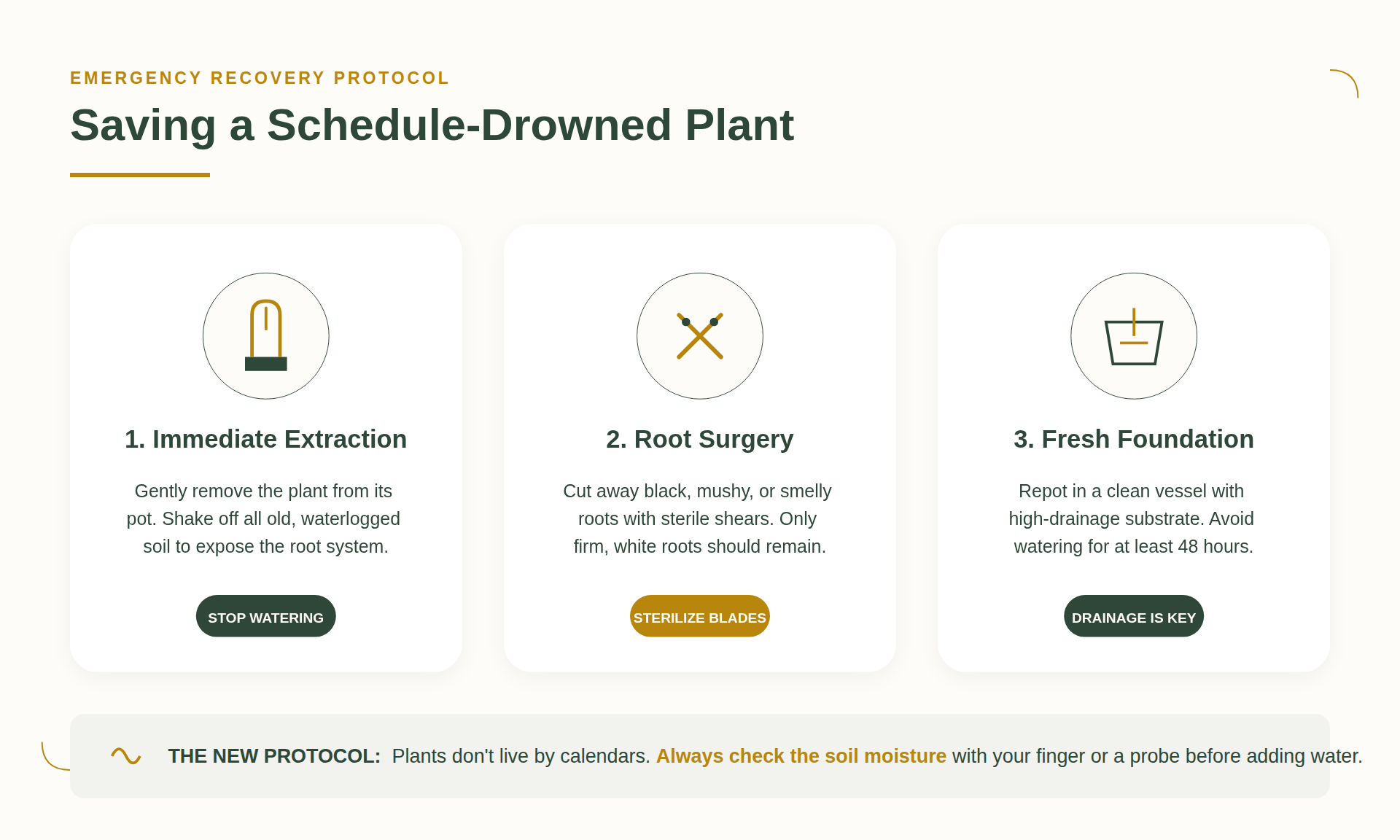
The plant must be removed from its container to inspect the roots. Healthy roots are firm and white or tan; decayed roots are dark, soft, and easily detached. All decayed tissue must be removed using sterilized tools to prevent further spread.
The Rescue Steps
- Hydrogen Peroxide Treatment: Submerge the remaining roots in a solution of one part 3% hydrogen peroxide to two parts water to eliminate anaerobic bacteria and increase oxygen levels in the tissue.
- Sterile Substrate: Repot the plant in fresh, coarse media. Materials like perlite or calcined clay can be used to maximize airflow during recovery.
- Environmental Adjustment: Place the plant in a high-humidity environment to reduce transpiration demand while the root system recovers.
These steps are necessary when biological requirements have been ignored in favor of a schedule. Successful plant maintenance relies on responding to biological indicators rather than a calendar.