This article was researched and reviewed by an indoor plant specialist.
# Management Guide for Overgrown Pothos Walls: Technical Protocols A mature specimen of *Epipremnum aureum* (Golden Pothos) can reach lengths exceeding fifteen feet. In indoor environments, these vines often utilize vertical surfaces, such as exposed brick or piping, for support. Without intervention, the growth pattern can become disorganized, leading to issues with structural integrity and pest management.Guide Overview
- The Science of the Cut: Breaking Apical Dominance for a Thicker Wall
- Understanding Apical Dominance in Epipremnum Aureum
- How Pruning Stimulates Latent Auxiliary Buds
- The Transition from Single Vine to Multi-Branch Canopy
- Timing Your Pruning for Maximum Growth Response
- Surgical Precision: Tools and Sterilization Standards
- Why Household Scissors are Ineffective for Pothos
- Isopropyl Alcohol vs. Bleach: The Sterilization Protocol
- Identifying the Node: Where to Make the Cut
- Preventing Pathogen Entry Post-Pruning
- Managing 30-Foot Vines: The ‘Loop and Pin’ vs. Hard Pruning
- The Loop and Pin: Creating Artificial Density
- When to Perform a Hard Prune
- Managing Adventitious Roots on Drywall and Trellises
- Redirecting Growth Patterns Without Stressing the Root System
- Fixing Gaps: Using Meristematic Propagation to Fill Bare Sections
- Identifying Viable Nodes for Water vs. Soil Propagation
- The ‘Bobby Pin’ Method for Soil Contact and Rooting
- Integrating New Cuttings into an Established Wall System
- Ensuring Nutrient Equity Between Old and New Growth
- Trellis Evolution: Upgrading Infrastructure for Mature Pothos
- Why Standard Trellises Fail After Year Two
- Custom Wire Grids vs. Modular Hexagon Supports
- Weight Distribution for Heavy, Mature Foliage
- The ‘Refresh’ Cycle: Detaching and Re-anchoring Vines
- Post-Pruning Hygiene: Preventing Fungus Gnat Infestations
- The Link Between Decaying Organic Matter and Fungus Gnats
- Subsurface Watering Techniques for Large Wall Displays
- Systemic Prevention vs. Reactive Pest Control
- Maintaining Airflow in Dense Pothos Canopies
The Science of the Cut: Breaking Apical Dominance for a Thicker Wall
Pruning is a method used to alter the hormonal signaling within the plant stems. In a 20-foot Pothos vine, growth is governed by apical dominance.Understanding Apical Dominance in Epipremnum Aureum
The “apex” refers to the growth point at the tip of the vine. This point produces auxin, a hormone that suppresses the growth of auxiliary buds located at each node. In a natural habitat, this mechanism prioritizes vertical growth to reach higher light levels. In an indoor setting, this often results in long, single vines with minimal lateral fullness. Removing the apex disrupts this hormonal suppression.How Pruning Stimulates Latent Auxiliary Buds
When the terminal bud is removed, the source of auxin is eliminated. This leads to an increase in cytokinin levels relative to auxin. Cytokinins stimulate the activation of dormant auxiliary buds. Following a clean cut, the nodes below the incision will begin to develop new growth points, redirecting energy from vertical extension to lateral density. A significant prune can trigger multiple auxiliary buds to activate simultaneously, increasing the plant’s overall volume.The Transition from Single Vine to Multi-Branch Canopy
Achieving a dense wall requires utilizing the growth potential of individual nodes. If a wall appears thin, it is typically due to prolonged apical dominance. Light measurements often show higher intensity at the top of a wall compared to the base. Pruning forces the plant to distribute vascular pressure more evenly, encouraging investment in lower foliage.Timing Your Pruning for Maximum Growth Response
While *Epipremnum aureum* is resilient, the speed of recovery is influenced by timing. Pruning is most effective in late winter or early spring. As day length and light intensity increase, the plant’s metabolic rate rises. Pruning during periods of semi-dormancy, such as mid-winter with low light and low humidity, may result in a slower response from auxiliary buds. The emergence of new growth in spring is the optimal indicator for pruning.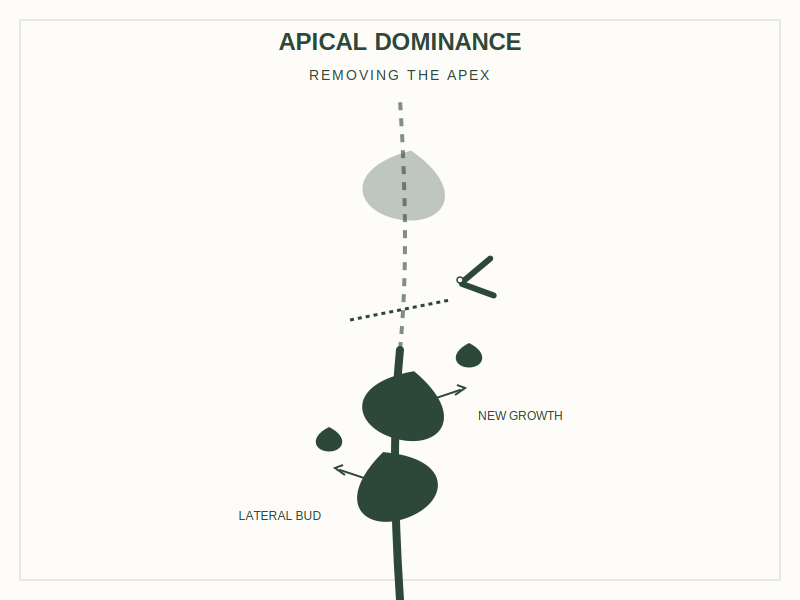
Surgical Precision: Tools and Sterilization Standards
Proper tool selection and sterilization are necessary to prevent the introduction of pathogens such as *Fusarium* or *Pythium* into the vascular system.Why Household Scissors are Ineffective for Pothos
Standard scissors operate by shearing, which can crush the cells in a fleshy Pothos stem. This mechanical damage compromises the xylem and phloem. A crushed stem creates a jagged wound that is susceptible to bacterial infection. Bypass pruners or dedicated floral snips are recommended as they provide a clean slice through the tissue without compression.Isopropyl Alcohol vs. Bleach: The Sterilization Protocol
Blades should be wiped with 70% isopropyl alcohol before use. The 70% concentration is more effective than 99% because the water content slows evaporation, allowing the alcohol to penetrate the cell walls of bacteria and fungi. While bleach is an alternative, it can be corrosive to high-carbon steel blades. Sterilization between plants is required to prevent cross-contamination, particularly if pests have been present.Identifying the Node: Where to Make the Cut
The node is the junction where the leaf and aerial roots emerge from the stem. Pruning should occur slightly above the node on the side closer to the root system. Leaving an excessive internode section can lead to tissue decay that may affect the healthy node. Conversely, cutting too close to the node may damage the auxiliary bud.Preventing Pathogen Entry Post-Pruning
In high-humidity environments, fresh cuts may benefit from a light application of cinnamon or wax to prevent infection. In lower humidity, cuts typically callous within hours. If a fresh wound becomes dark and soft, it indicates infection and should be pruned back further with sterilized tools.Managing 30-Foot Vines: The “Loop and Pin” vs. Hard Pruning
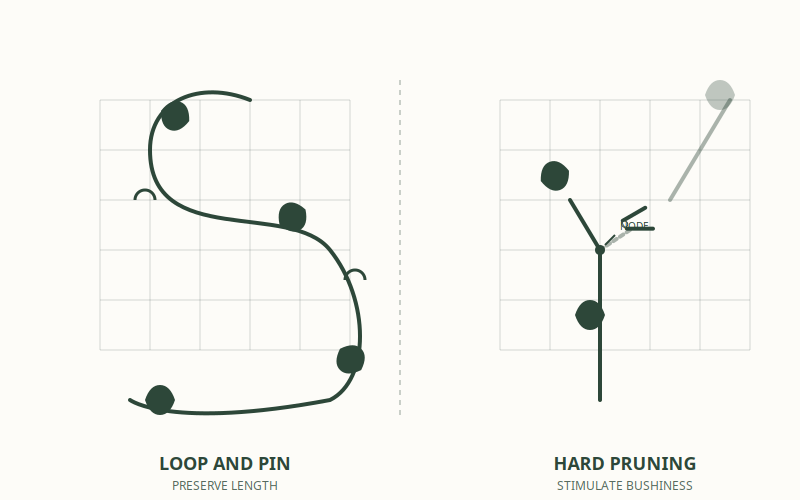
Vines reaching 30 feet often exhibit thinning and reduced leaf size due to the energy required to transport water and nutrients over long distances. Management options include aesthetic adjustments or biological resets.The Loop and Pin: Creating Artificial Density
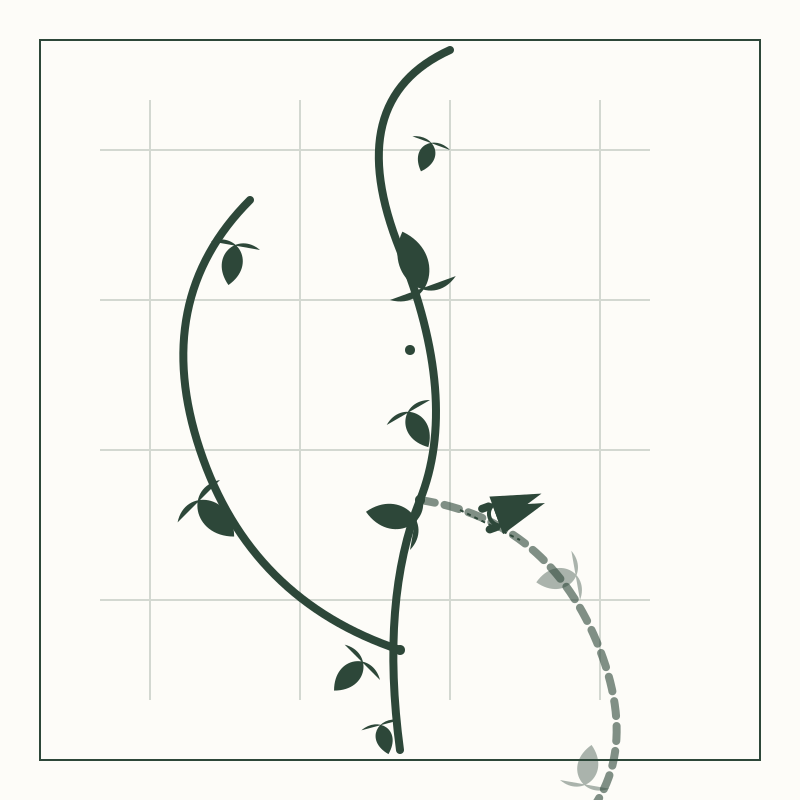
The “Loop and Pin” method involves redirecting long vines back toward the pot or across bare sections of the support structure. Using plastic-coated garden wire or floral pins, nodes are positioned near the soil or trellis. If a node maintains contact with moist soil, it can develop adventitious roots, providing an additional source of nutrients and water for that specific vine. This reduces the transport distance and can increase leaf size at the vine’s terminus.When to Perform a Hard Prune
If a vine has extensive bare sections, a hard prune may be necessary. Pothos responds well to significant pruning. Removing a large portion of the foliage allows the established root system to support a smaller volume of growth, often resulting in more vigorous new leaves.Managing Adventitious Roots on Drywall and Trellises
Pothos uses adventitious roots to attach to surfaces. Attachment to drywall can result in damage to paint and paper layers upon removal. To prevent this, a wire grid should be installed with a one-inch standoff from the wall. Aerial roots can be redirected toward the grid or trimmed without compromising the plant’s health, provided the primary root system is functional.Redirecting Growth Patterns Without Stressing the Root System
Repositioning mature vines changes their light orientation. This may lead to leaf abscission as the plant optimizes for the new light source. When rearranging, maintain the orientation of the leaf surfaces toward the light as much as possible to minimize stress.
Fixing Gaps: Using Meristematic Propagation to Fill Bare Sections
Foliage loss at the base of a trellis is common as the plant grows toward light sources. These gaps can be filled using cuttings obtained during pruning.Identifying Viable Nodes for Water vs. Soil Propagation
Cuttings with at least two nodes are suitable for propagation. Water propagation allows for monitoring root development. Nodes with visible aerial root initials typically activate the fastest. Cuttings are ready for planting once secondary roots have reached several inches in length.The “Bobby Pin” Method for Soil Contact and Rooting
Layering involves pinning a node from an attached vine directly into the soil using a landscape staple or bobby pin. Maintaining soil contact while the node is still connected to the parent plant ensures a continuous nutrient supply during root development. Once established, the connection can be severed, creating a new growth point at the base of the wall.Integrating New Cuttings into an Established Wall System
When adding propagated cuttings to an existing pot, use a tool to create a space in the root mass and fill it with fresh, well-draining substrate. Secure the new vine to the lower section of the trellis to immediately address bare spots. Ensure vines are kept out of reach of pets, as Pothos contains calcium oxalate crystals which are irritants.Ensuring Nutrient Equity Between Old and New Growth
New cuttings have smaller root systems than the established plant. For the first month, target-water the specific areas where new cuttings are located. A diluted, high-nitrogen liquid fertilizer can assist in establishing new foliage.Trellis Evolution: Upgrading Infrastructure for Mature Pothos
A mature Pothos wall can carry significant weight, particularly after irrigation. Infrastructure must be capable of supporting this load to prevent structural failure.Why Standard Trellises Fail After Year Two
Organic materials like bamboo or thin wood are subject to decay from moisture. Additionally, Pothos stems increase in diameter as they mature. If the support structure is too restrictive, it may cause constriction of the vines or joint failure.Custom Wire Grids vs. Modular Hexagon Supports
Powder-coated steel wire grids or cattle fencing provide durable, high-capacity support. Modular supports allow for expansion as the plant grows. For large installations, supports should be anchored into wall studs. Using standoffs to maintain a gap between the wall and the grid improves airflow and allows vines to wrap around the support.Weight Distribution for Heavy, Mature Foliage
Supports should be anchored at multiple points to prevent bowing under the weight of the foliage. Leaf mass varies by variety; “Jade” or “Golden” Pothos grown in high light produce thicker, heavier leaves than “Neon” varieties. Anchor points should be planned according to the expected mature weight.The “Refresh” Cycle: Detaching and Re-anchoring Vines
A structural audit should be performed every two years. This involves detaching vines to clean the support structure and inspect for pests. Repositioning older, woody vines and newer, flexible growth helps maintain even coverage across the trellis.