This article was researched and reviewed by Leo, an indoor plant specialist.
Girdling: The Impact of Wire Ties on Tropical Plants
Girdling in species such as Philodendron melanochrysum often occurs due to the improper application of support materials. While these materials are intended to provide stability, they can cause significant physiological damage if not monitored. The use of rigid florist wire is a primary cause of stem constriction, leading to long-term health issues for the specimen.
Guide Overview
- Girdling: The Impact of Wire Ties on Tropical Plants
- The Anatomy of Girdling
- Why the Stem Swells Above the Wire
- Phloem vs. Xylem: The Nutrient Roadblock
- Identifying the Point of No Return
- Procedures for Removing Embedded Wire
- Required Tools for Wire Removal
- The ‘Micro-Snip’ Technique
- When to Leave the Wire Alone
- Avoiding Epidermis Stripping
- The 50% Rule: Predicting Your Plant’s Survival Rate
- Calculating Circumference Damage
- Vascular Bypass and Compartmentalization
- Signs of Root Starvation
- Recovery Rates in Vining Plants (Monstera/Pothos)
- Post-Removal Recovery: Callus Tissue and Wound Wood
- Formation of Wound Wood
- Humidity and Temperature Requirements for Healing
- Efficacy of Wound Sealers
- Monitoring for Secondary Infections
- Preventative Measures: Trellising and Support Standards
- Recommended Materials for Stem Support
- Implementing the Two-Finger Tension Test
- Seasonal Adjustments for Active Growth Phases
- Self-Adhering Wraps vs. Metal Wire
Girdling is a gradual process that occurs over several months. Unlike rapid environmental stressors, such as extreme temperature fluctuations or power failures that cause immediate cellular collapse, girdling involves the slow mechanical constriction of the plant’s vascular system. This condition often goes unnoticed until the plant’s structural and nutritional integrity is compromised.
The Anatomy of Girdling
To understand the impact of embedded wire, the stem must be viewed as a vascular conduction system. Beneath the epidermis and the cortex lies the vascular cambium, a layer of generative tissue responsible for producing new cells.
When a wire tie is applied with excessive tension, or when the plant grows around a fixed tie, the vascular cambium is compressed. This layer produces phloem toward the exterior and xylem toward the interior. An embedded wire acts as a mechanical obstruction on this generative layer, preventing the formation of new vascular tissue and constricting existing pathways.
Why the Stem Swells Above the Wire
Localized swelling above a wire tie indicates an accumulation of hormones and nutrients. This is a physiological response to the obstruction of downward transport within the stem.
Plants utilize polar auxin transport, where auxin moves from the apical meristems downward toward the root system. When the wire constricts the phloem, this downward flow is interrupted. Auxin accumulates at the site of the obstruction, stimulating rapid cell division and expansion. This results in a characteristic bulge. While this is an attempt by the plant to grow over the obstruction, it creates a structural weak point susceptible to mechanical failure.
Phloem vs. Xylem: The Nutrient Roadblock
The vascular system consists of two primary conduction tissues: the xylem and the phloem.
- The Xylem: Located deeper within the stem, the xylem transports water and minerals from the roots to the foliage via transpiration pull. Due to its depth, it is often the last tissue to be fully compressed. Consequently, a girdled plant may maintain green foliage for an extended period while receiving water.
- The Phloem: Located closer to the stem surface, the phloem transports photosynthates (sugars) from the leaves to the root system.
When a wire becomes embedded, the phloem is affected first. This prevents the distribution of nutrients to the roots, leading to root system die-back. As the roots fail, the plant’s ability to take up water decreases, eventually resulting in wilting and systemic decline.
Identifying the Point of No Return
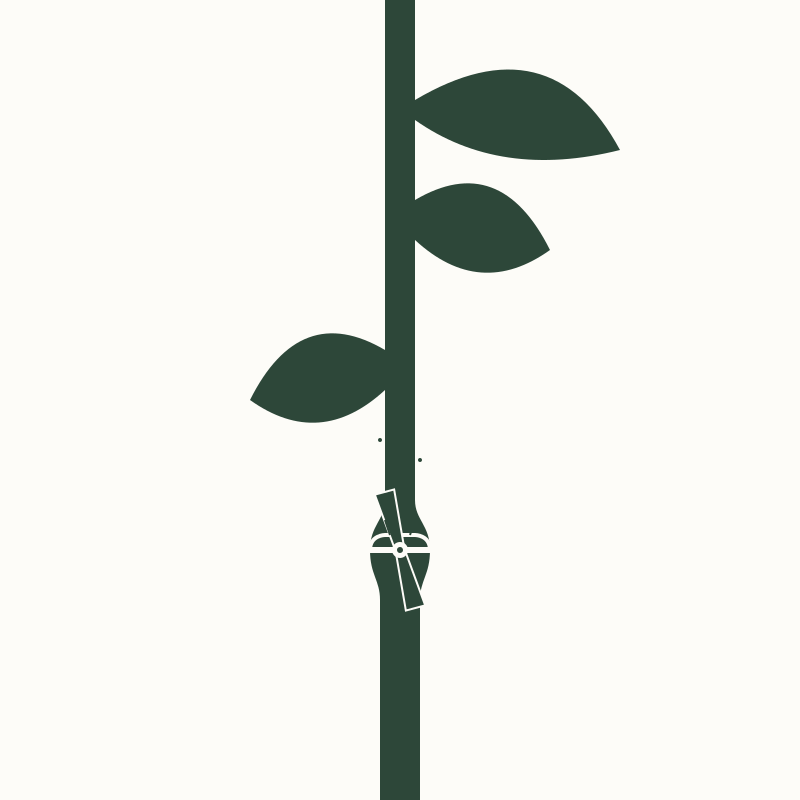
Diagnostic indicators of severe girdling include tissue fusion, where the stem has grown completely over the wire. If leaves distal to the tie are significantly smaller than those below it, the vascular system is compromised. The presence of sap or exudate from the swelling may indicate secondary infections by pathogens such as Erwinia within the necrotic tissue surrounding the metal.
Procedures for Removing Embedded Wire
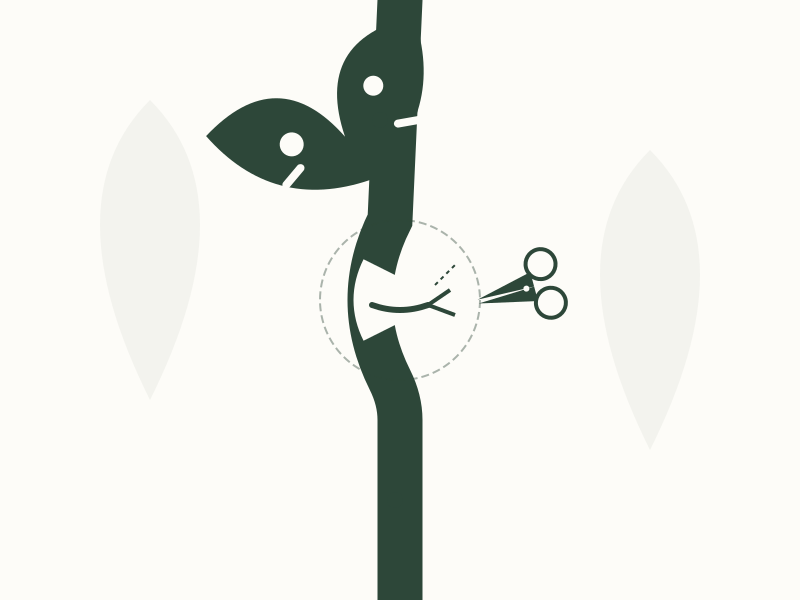
Removing an embedded wire requires precise technical intervention. The procedure must be performed using specialized tools to minimize further trauma to the plant’s vascular tissues.
Required Tools for Wire Removal
Standard household scissors are unsuitable for this task. Tools must be capable of cutting metal without applying lateral pressure to the weakened stem.
- Flush-Cut Wire Snips: These allow for a flat cut against the stem surface, avoiding the mechanical pinch caused by standard pliers.
- Hemostats or Fine Needle-Nose Pliers: Used for extracting the wire segments after they have been cut.
- Sterilized Scalpel or X-Acto Blade: Used to clear necrotic tissue that may be securing the wire.
- Isopropyl Alcohol (70%): Used to sterilize all instruments to prevent the introduction of fungal or bacterial pathogens into the open wound.
The ‘Micro-Snip’ Technique
Attempting to unwind an embedded wire can cause extensive damage to the cambium and may result in the stripping of the epidermis. A segmental approach is required.
- Identify the point of least resistance: Locate the area where the wire is closest to the stem surface.
- Initial Cut: Use flush cutters to make a single, clean break in the wire.
- Segmental Cutting: Make a second cut 2-3 millimeters from the first. This creates a gap in the wire ring, immediately relieving pressure on the stem.
- Extraction: Use hemostats to test the mobility of the wire. If the wire remains fixed, do not apply force.
When to Leave the Wire Alone
In certain instances, the wire may be integral to the plant’s current vascular architecture. If the wire is entirely engulfed by stem tissue and is no longer visible, extraction may cause more trauma than the obstruction itself.
Plants can sometimes perform a vascular bypass, where new xylem and phloem bridge the gap over the embedded object. If the plant exhibits vigorous growth and healthy foliage, the wire should remain in place. For example, in large specimens like Monstera deliciosa, the risk of a deep vertical incision may outweigh the benefits of removal, particularly in environments with low ambient humidity.
Avoiding Epidermis Stripping
Plastic-coated ties often adhere to plant exudates. If resistance is encountered during extraction, use a scalpel to separate the tissue from the wire. Extraction should always follow the path of the wire rather than pulling outward from the stem to prevent tearing.
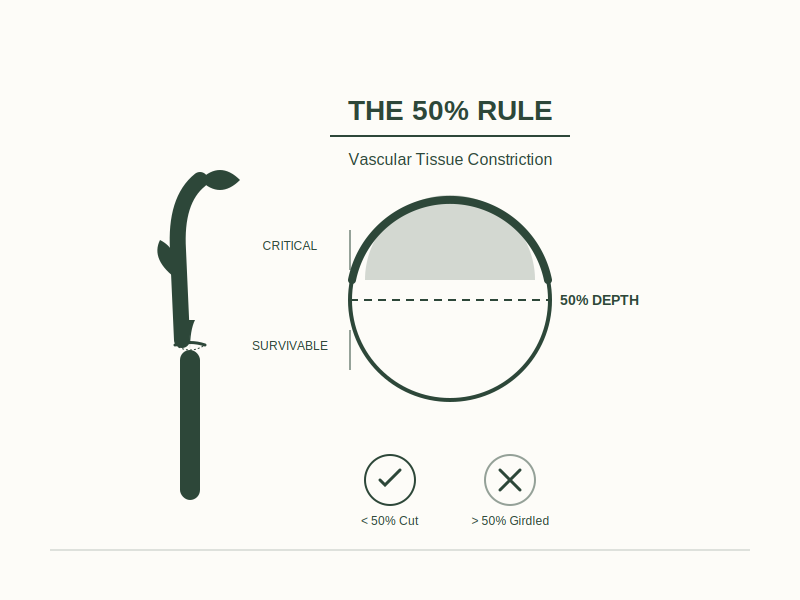
The 50% Rule: Predicting Your Plant’s Survival Rate
The 50% Circumference Rule is used to assess the probability of recovery following wire removal.
Calculating Circumference Damage
The extent of the girdle relative to the stem’s circumference determines the necessary aftercare.
- Less than 25% Girdled: Minimal impact. The plant typically fills the gap with callus tissue within a few weeks.
- 25% to 50% Girdled: Moderate impact. Wilting may occur in upper leaves. Humidity should be increased to reduce the transpirational load on the remaining xylem.
- Over 50% Girdled: High risk. Structural integrity is compromised. Heavy plants require external support, such as a splint, that does not contact the wound site.
Vascular Bypass and Compartmentalization
Plants do not repair damaged cells; they utilize Compartmentalization of Decay in Trees (CODIT) to wall off injured areas. If a portion of the cambium remains intact, the plant will prioritize nutrient delivery to that area to build bypass tissue. This tissue may initially appear irregular but is functionally capable of transporting water and nutrients.
Signs of Root Starvation
Monitor the substrate for signs of root decline. If the stem was girdled for an extended period, the roots may have begun to rot due to a lack of photosynthates. Wilting in moist soil indicates root dysfunction. Substrate aeration, performed by gently creating holes in the medium with a sterile implement, can help introduce oxygen to the root zone during recovery.
Recovery Rates in Vining Plants (Monstera/Pothos)
Vining plants often exhibit faster recovery due to a high density of adventitious root nodes. If the main stem is girdled, these plants can develop new roots from nodes above the injury. Utilizing aerial roots by placing them in a growth medium or water provides a secondary hydration source that bypasses the injured section of the stem.
Post-Removal Recovery: Callus Tissue and Wound Wood
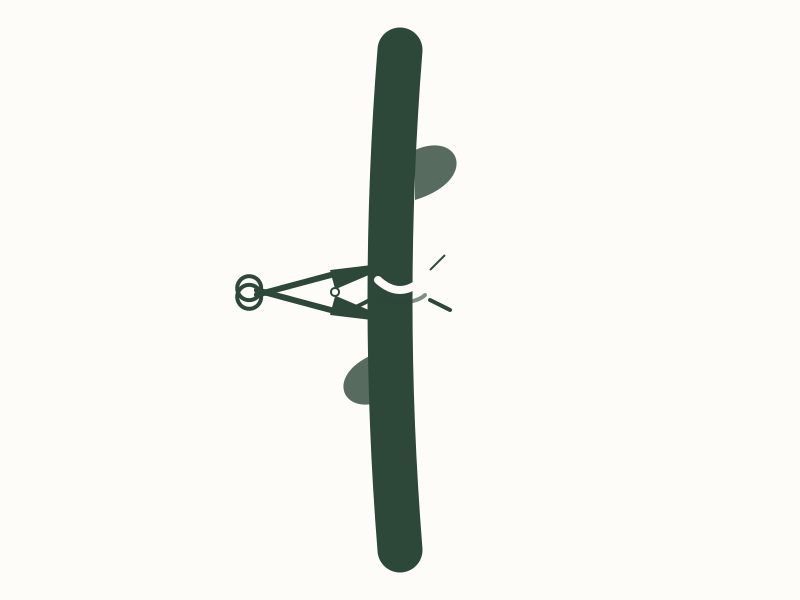
Following wire removal, the wound will appear as a deep indentation. It is important to allow the plant’s natural healing processes to occur without interference.
Formation of Wound Wood
The initial healing response involves the creation of callus tissue, consisting of undifferentiated parenchyma cells. These cells eventually differentiate into new vascular cambium. In woody-stemmed plants, this develops into periderm or wound wood, which is a dense, protective layer. This tissue should not be disturbed or cleaned.
Humidity and Temperature Requirements for Healing
Healing a girdled wound requires high humidity (above 60%) combined with consistent airflow.
- Airflow: High humidity without adequate ventilation can lead to fungal infections such as Botrytis in the open wound.
- Humidity Management: Pebble trays can be used for localized humidity enhancement.
- Temperature: Maintain temperatures between 75°F and 80°F to increase the metabolic rate of cell division and accelerate callus formation.
Efficacy of Wound Sealers
Modern botanical practices generally discourage the use of wound sealers, such as tar or wax. These substances can trap moisture and bacteria against the wound, promoting decay. In environments with high fungal spore loads, a light application of cinnamon may serve as a natural antifungal agent. Air exposure is the preferred method for drying surface cells.
Monitoring for Secondary Infections
Soft, black tissue at the edges of the wound indicates an active infection. Localized copper fungicides may be required. If the infection progresses, it may be necessary to excise the healthy portion of the plant above the girdle for propagation.
Preventative Measures: Trellising and Support Standards
Support materials must account for the fact that plant stems are dynamic, expanding structures. Fixed ties must be regularly adjusted to accommodate growth.
Recommended Materials for Stem Support
Rigid wire and metal-core twist ties should be avoided for soft-stemmed tropical plants.
- Velcro Plant Ties: These provide a wide surface area to distribute pressure and are adjustable.
- Soft Cotton Twine: Effective, though susceptible to degradation in high-humidity environments.
- Nylon Materials: These offer high elasticity and minimize mechanical stress.
- Vinyl Stretch Tie: Designed to expand as the plant grows, preventing constriction.
Implementing the Two-Finger Tension Test
When securing a plant to a support, ensure that two fingers can be inserted between the tie and the stem. The tie should provide stability without exerting compressive force on the vascular tissue.
Seasonal Adjustments for Active Growth Phases
Growth rates vary seasonally. During peak growth periods, stem diameter can increase rapidly. Regular inspections of all support ties are recommended. Any tie that does not move freely should be removed and replaced.
Self-Adhering Wraps vs. Metal Wire
For heavy vines, self-adhering medical wraps are an effective alternative. These wraps provide elastic potential, expanding with the stem and ensuring a uniform distribution of pressure. This prevents the notching effect associated with rigid wire.
Recovery from girdling requires consistent monitoring. While permanent scarring may remain in the form of woody ridges, plants can regain vigor and produce healthy foliage if the obstruction is addressed and proper aftercare is provided.