This article was researched and reviewed by Leo, an indoor plant specialist.
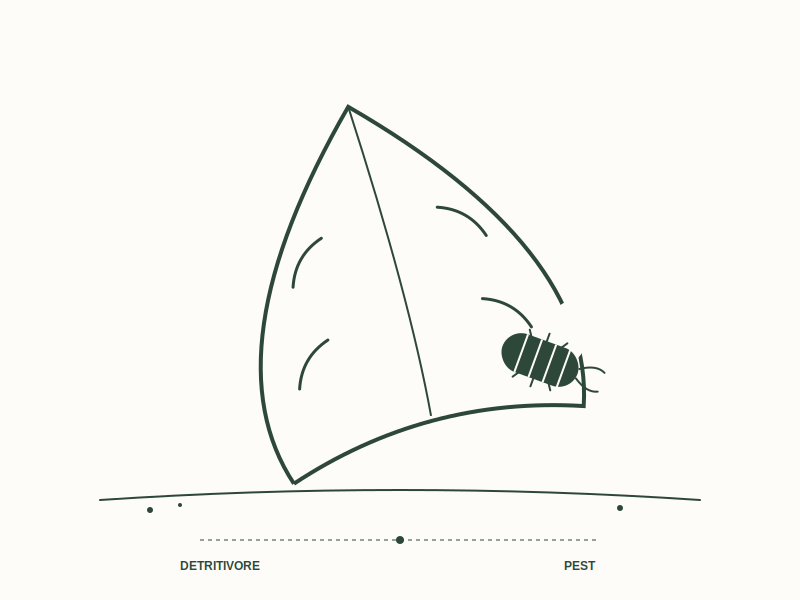
# Isopods in Houseplants: Beneficial Organisms or Potential Root Pests The presence of isopods in the soil of indoor plants such as *Monstera thai constellation* often leads to concerns regarding pest infestations. However, observations of these organisms in various environments, including during periods of plant decay, indicate that they primarily function as decomposers rather than primary pests. While they are often associated with decaying organic matter, their role in a controlled indoor environment requires a technical understanding of their biology and behavior.Guide Overview
- Identification: Differentiating Isopods from Pests
- Pill Bugs vs. Sowbugs: Crustacean Anatomy
- Biological Classification: Terrestrial Crustaceans
- Distinguishing Isopods from Root Mealybugs
- Conglobation: The Moisture Retention Mechanism
- The Detritivore Function in Soil Ecosystems
- Decomposition of Organic Matter
- Nutrient Cycling and Nitrogen Availability
- Soil Aeration and Compaction Prevention
- Impact on Fungal Growth and Gnat Larvae
- Conditions for Consumption of Living Tissue
- Resource Depletion and Root Damage
- Population Dynamics in High-Humidity Environments
- Vulnerability of Seedlings and Propagations
- Identifying Isopod Feeding Damage
- Isopods vs. Fungus Gnats: Comparative Management
- Isopods as a Non-Flying Alternative
- Competition for Organic Resources
- Coexistence with Beneficial Nematodes
- Integrating Isopods into Indoor Environments
- Management and Population Control
- The Potato Trap Extraction Method
- Moisture Management and Population Suppression
- Repotting Protocols for High Populations
- Application of Diatomaceous Earth
- The Verdict: Management Decisions
- Bioactive Cultivation Perspective
- Sterile Cultivation Perspective
- Decision Checklist
- Maintaining Soil Ecosystem Balance
Identification: Differentiating Isopods from Pests
Accurate identification is necessary before applying pesticides. Mistaking beneficial or neutral organisms for pests can lead to unnecessary soil sterilization, which may increase vulnerability to fungus gnats.Pill Bugs vs. Sowbugs: Crustacean Anatomy
Isopods are terrestrial crustaceans, taxonomically closer to shrimp than to insects. Their biological requirements, particularly their reliance on moisture for respiration via pleopods (gill-like structures), determine their habitat and behavior. Common species found in houseplant soil include: * **Pill Bugs (*Armadillidium vulgare*):** Characterized by a rounded exoskeleton and the ability to roll into a sphere (conglobation) as a defense against desiccation and predation. * **Sowbugs (*Porcellio scaber*):** These possess a flatter profile and cannot roll into a ball. They feature two posterior appendages called uropods and are more susceptible to desiccation.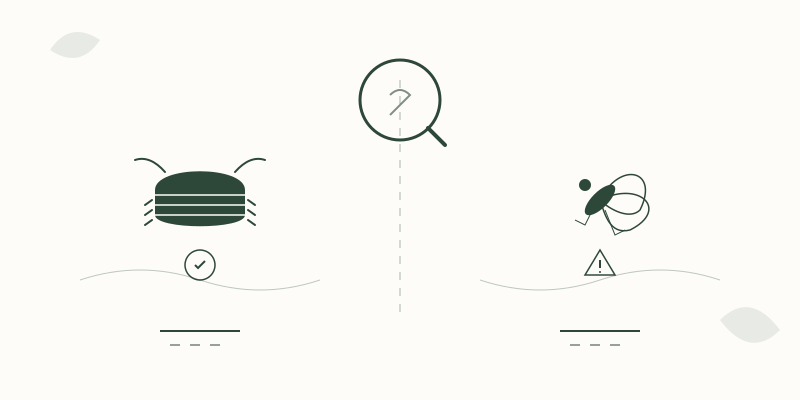
Biological Classification: Terrestrial Crustaceans
Unlike insects, which utilize spiracles for respiration, isopods use modified gills on their ventral side. This physiological trait requires a high-moisture environment. If the substrate dries out completely, the organisms will perish. Consequently, they are unlikely to survive outside of moist potting media in typical indoor environments.Distinguishing Isopods from Root Mealybugs
Root mealybugs (*Rhizoecus* spp.) are small, white, and covered in a waxy secretion. They move slowly and typically cluster on roots. Isopods are generally grey, brown, or mottled and exhibit high mobility. If an organism moves rapidly when the soil is disturbed, it is likely an isopod. Stationary white matter that exhibits slow movement over time indicates a mealybug infestation.Conglobation: The Moisture Retention Mechanism
Rolling into a ball is a moisture-retention strategy. By enclosing their ventral side and gills within their exoskeleton, isopods can survive temporary decreases in humidity. They react to light and heat by seeking shade or rolling up, serving as indicators of soil hydration levels.The Detritivore Function in Soil Ecosystems
In botanical and horticultural contexts, isopods occupy a niche focused on the decomposition of complex organic molecules.Decomposition of Organic Matter
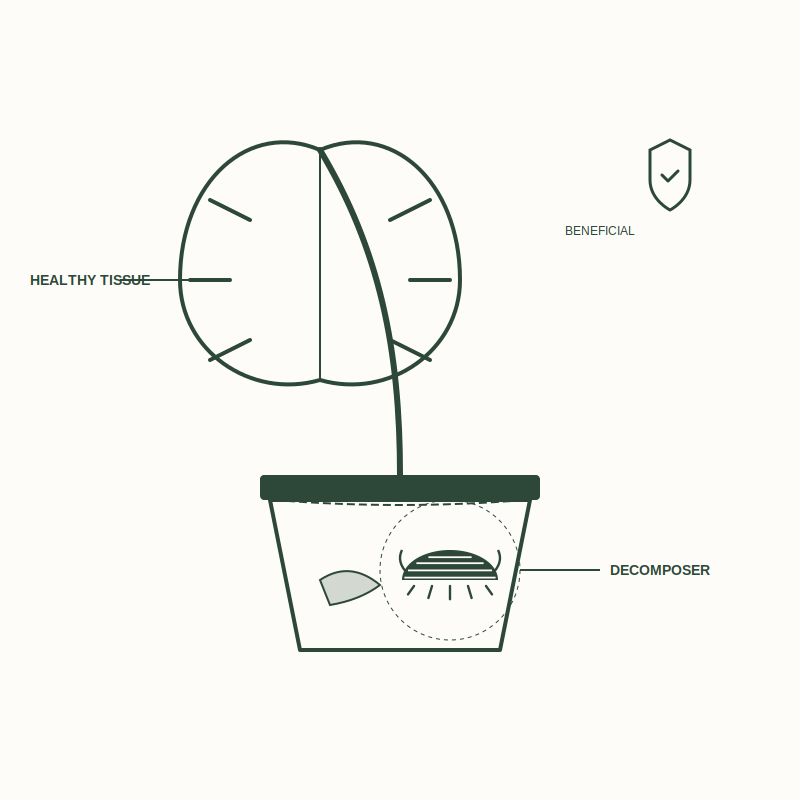
Isopods are detritivores, primarily consuming decaying leaves, rotting wood, and fungal mycelium. Their digestive systems can process lignin and cellulose. By shredding organic debris, they increase the surface area available for microbial decomposition, reducing the likelihood of pathogenic mold growth on the soil surface.Nutrient Cycling and Nitrogen Availability
Isopod excrement (frass) contains bioavailable nitrogen, phosphorus, and potassium. It also introduces beneficial microbes into the soil. This process converts organic amendments, such as orchid bark, into nutrients accessible to the plant.Soil Aeration and Compaction Prevention
Soil compaction reduces oxygen availability to roots. Isopods act as excavators; their movement through the upper soil layers creates micro-tunnels that facilitate water penetration and gas exchange in the root zone.Impact on Fungal Growth and Gnat Larvae
Isopods are opportunistic feeders and may consume fungus gnat larvae. More significantly, they compete with gnats for organic resources. By consuming the fungal growth that gnat larvae require, isopods can suppress gnat populations.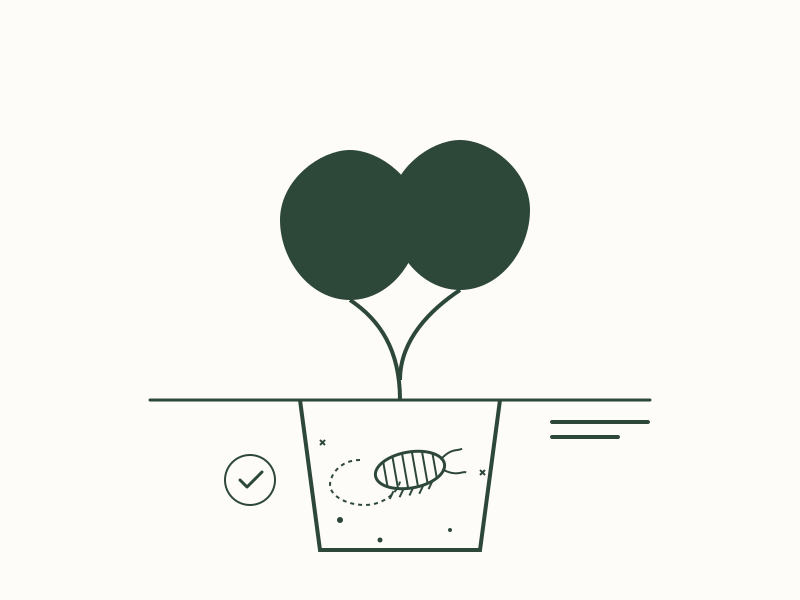
Conditions for Consumption of Living Tissue
Isopods may consume living plant tissue if their primary food source is depleted or if population density becomes excessive.Resource Depletion and Root Damage
In sterile or highly cleaned environments lacking leaf litter or bark, isopods may feed on tender root hairs. This can result in drought stress symptoms in the plant, as root hairs are the primary site for water and nutrient uptake.Population Dynamics in High-Humidity Environments
In high-humidity environments, isopod populations can increase rapidly. Without natural predators like spiders, which are often absent in indoor pots, the population may exceed the available supply of decaying matter, leading to a shift toward feeding on live plants.Vulnerability of Seedlings and Propagations
Isopod mouthparts are capable of damaging the tender tissue of seedlings and new propagations. In bioactive setups, these young plants are at higher risk of being consumed.Identifying Isopod Feeding Damage
Isopod damage typically appears as ragged edges near the soil line. Unlike gastropods (snails and slugs), isopods do not leave mucus trails. Damage to the base of stems or stripped roots in the presence of isopods suggests they are the cause.Isopods vs. Fungus Gnats: Comparative Management
Fungus gnats are a common nuisance in indoor gardening due to their flight and tendency to move into living spaces.Isopods as a Non-Flying Alternative
Isopods are restricted to the soil and do not fly or migrate significantly from the pot. They provide a method of managing soil ecosystems without the airborne presence associated with gnats.Competition for Organic Resources
Isopods and fungus gnat larvae compete for the same food sources. Isopods are generally more efficient feeders and can outcompete gnats for available organic matter and fungi.Coexistence with Beneficial Nematodes?
Isopods can coexist with beneficial nematodes. While nematodes target gnat larvae, isopods process larger organic debris, providing a multi-tiered approach to soil management.Integrating Isopods into Indoor Environments
Bioactive soil management involves accepting the presence of soil organisms. Utilizing isopods and springtails can improve plant growth rates compared to sterile environments, provided the ecosystem remains balanced.Management and Population Control
If isopod populations require reduction, several non-chemical methods are effective.The Potato Trap Extraction Method
A raw, hollowed-out potato placed face-down on the soil surface overnight will attract isopods seeking moisture and starch. The organisms can then be collected and removed from the pot.Moisture Management and Population Suppression
Allowing the top layer of soil to dry completely will reduce isopod populations due to their respiratory requirements. Bottom-watering is an effective technique to maintain deep root hydration while keeping the surface dry to deter both gnats and isopods.Repotting Protocols for High Populations
For extreme population densities: 1. Extract the plant from the container. 2. Remove the existing substrate. 3. Rinse the root system with lukewarm water. 4. Repot in fresh media.Application of Diatomaceous Earth
Diatomaceous Earth (DE) causes mechanical damage to the exoskeletons of crawling organisms. * **Application:** Apply a thin layer to dry soil surfaces as a barrier. * **Contraindications:** DE is ineffective when wet and will kill all beneficial soil organisms indiscriminately.The Verdict: Management Decisions
The decision to maintain or remove isopods depends on the cultivation goals.Bioactive Cultivation Perspective
In self-sustaining ecosystems, isopods should be maintained to facilitate nutrient cycling and suppress gnats. Providing supplemental organic matter, such as dried leaves, ensures they do not feed on live roots.Sterile Cultivation Perspective
In semi-hydroponic or sterile environments, isopods should be removed. The lack of organic matter in these setups increases the risk of plant damage.Decision Checklist
* **Seedlings present?** Remove. * **Visible root damage?** Remove. * **Gnat infestation?** Maintain (for competition). * **Heavy feeders (e.g., Monstera)?** Maintain (for nutrient cycling).Maintaining Soil Ecosystem Balance
The objective of soil management is ecological balance. Isopods contribute to soil resilience by processing organic matter and improving soil structure. Monitoring soil moisture and providing adequate organic debris are the primary methods for ensuring these organisms remain beneficial.