This article was researched and reviewed by Leo, our indoor plant specialist.
## Stop Coiling Your Pothos: 5 methods for a Massive, Bushy Plant
## The Coiling Trap: Why Your Pothos Stays Bald on Top
I’m sitting here in my Portland loft, staring at a hygrometer that’s bottomed out in this bone-dry indoor air. Outside, the sky is that bruised purple color that promises nothing but freezing rain, and my radiator is currently emitting a hiss that sounds suspiciously like a death rattle. Barnaby, my 14-year-old rescue cat, is currently attempting to groom a particularly dusty *Epipremnum aureum* (Pothos) leaf, and it reminds me why I’m so incredibly irritated by the ‘coiling hack’ currently plagueing the internet.
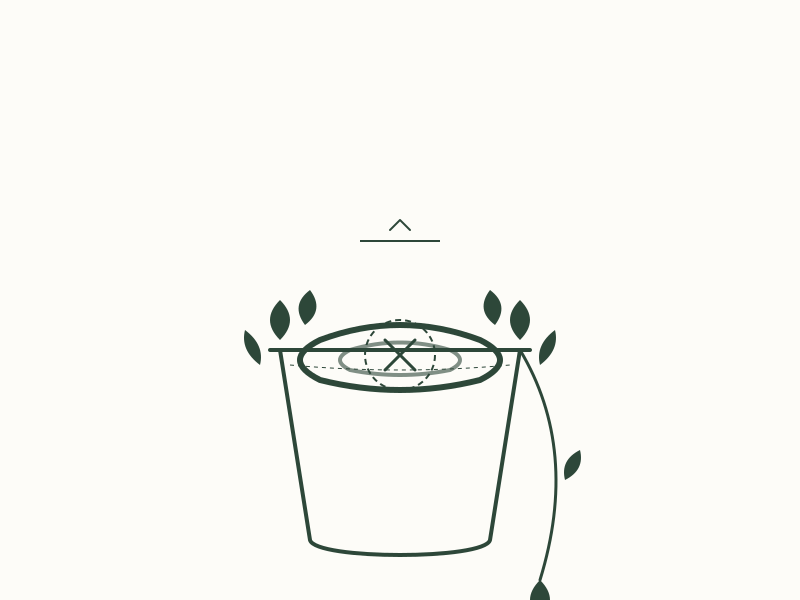
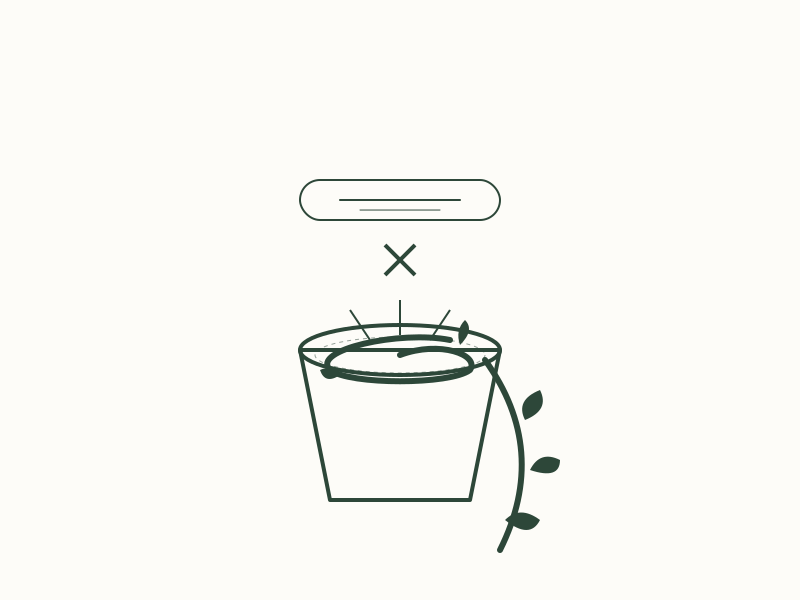
You’ve seen it. Some influencer with perfectly manicured nails and a plant that was clearly purchased ten minutes ago tells you to take your long, leggy Pothos vines and simply ‘coil’ them on top of the soil. They promise that, like magic, the plant will root and become a lush, bushy masterpiece.
It’s a lie. A biological, horticultural, and frankly insulting lie.
### The Myth of Passive Rooting
The primary reason this ‘hack’ fails is a fundamental misunderstanding of adventitious roots. Pothos are hemiepiphytic; in the wild, they crawl along the rainforest floor until they find a vertical surface (like a tree trunk) to climb. The small brown bumps you see along the stem—the nodes—are clusters of meristematic cells. These cells have the potential to become either roots or new stems, but they are genetically programmed to stay dormant until they receive a specific chemical and environmental ‘go’ signal.
Simply laying a dry vine on top of dry potting media does… nothing. There is no moisture gradient to trigger the hydrotropism required for those nodes to reach out. You aren’t ‘fixing’ the plant; you’re just creating a tangled mess of stems that are slowly desiccating because they are too far from their primary water source (the original root ball).
### Why Nodes Stay Dormant Without Moisture
In my old Florida greenhouse—the one I grew up in before I moved to this godforsaken desert of a loft—the humidity was so thick you could practically drink the air. In that environment, Pothos nodes would root into the air itself. But here in the Pacific Northwest, where the winter indoor air is drier than a stack of saltines, a node requires direct, sustained contact with a moist medium to break dormancy.
When you coil a vine, the air-gap between the node and the soil acts as an insulator. The plant’s vascular system, specifically the xylem, is already struggling to push water to the end of a six-foot vine. It isn’t going to waste precious ATP (adenosine triphosphate) on developing new root structures into a void.
### The Failure of the ‘Humidifier Hack’
People try to counter this by blasting a humidifier directly at the pot. All you’re doing is making your wallpaper peel and giving your cat a respiratory infection. Pothos roots need *tactile* moisture—capillary action. If the node doesn’t feel the physical presence of water or damp substrate, the auxins (growth hormones) stay concentrated at the tip of the vine, leaving the base as bald as a cue ball.
### Gravity vs. Growth: Why Vines Don’t Just Branch
Another misconception is that coiling somehow ‘tricks’ the plant into branching. Plants aren’t easily fooled. They operate on a strict energy budget. Why would a plant invest energy into a new lateral branch when it has a perfectly functional terminal bud (the tip) already reaching for light? Coiling the vine actually makes it *harder* for the plant to distribute nutrients because you’re forcing the sap to travel through a series of tight loops, increasing the hydraulic resistance within the stem. It’s like trying to water your garden with a kinked hose.
## The Science of Apical Dominance: Why Your Plant is Lazy
To understand why your Pothos looks like a sad string of pearls rather than a lush bush, we have to talk about **Apical Dominance**. This is the botanical equivalent of a corporate dictatorship.
### Understanding Auxin: The Growth Inhibitor
At the very tip of every Pothos vine is the apical meristem. This is the ‘brain’ of the vine. It produces a class of hormones called auxins (specifically Indole-3-acetic acid). Auxin is a fascinating molecule; it’s responsible for cell elongation, but it’s also a tyrant. It flows downward from the tip, through the phloem, and its very presence suppresses the growth of the ‘axillary buds’—those little bumps at every leaf node that *could* become new branches.
As long as the tip is intact and growing, it sends a chemical signal back down the line saying, “Don’t wake up. I’ve got this covered.” This is why a Pothos will grow twenty feet long without ever producing a single side branch. It’s focusing all its metabolic capital on that one lead runner.
### The Role of the Terminal Bud
The terminal bud is the primary sink for nutrients. When the plant photosynthesizes, the resulting sugars are prioritized for the terminal bud. In my 2018 collection—the one I lost when the power went out and the temperature in my loft dropped to near-freezing—I had a *Philodendron rugosum* that had mastered this. It was a single, long, beautiful vine. After the frost killed the tip, the auxin flow stopped. Suddenly, six different nodes along the stem exploded with new growth.
### How Apical Dominance Suppresses Lateral Branching
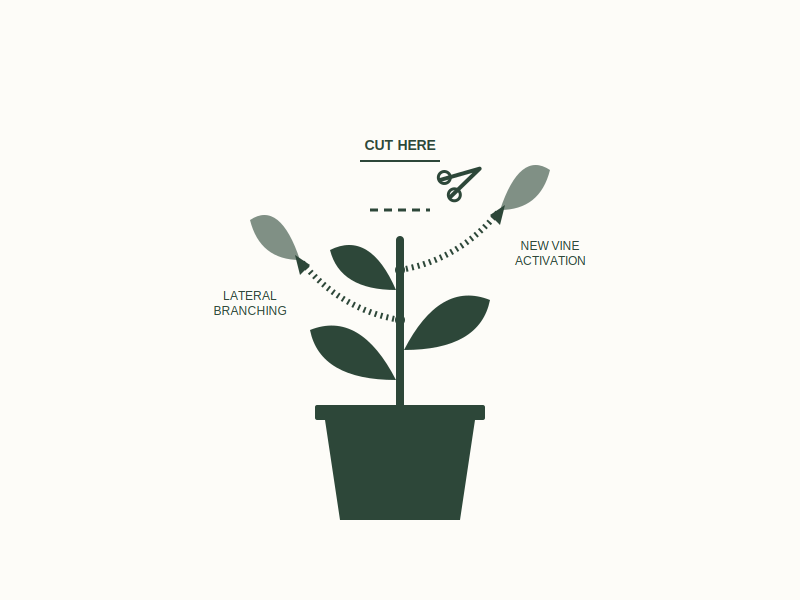
Without the inhibitory signal of auxin, the plant shifts its hormonal balance toward **cytokinins**. Cytokinins are the ‘anti-auxin’; they promote cell division and the activation of lateral buds. When you just coil a vine on top of the soil, you haven’t stopped the auxin flow. The tip is still there, still dominating, still telling all those coiled nodes to stay asleep. You’ve just moved the tip closer to the pot, but the hormonal hierarchy remains unchanged.
### Redirecting Energy from Tips to the Base
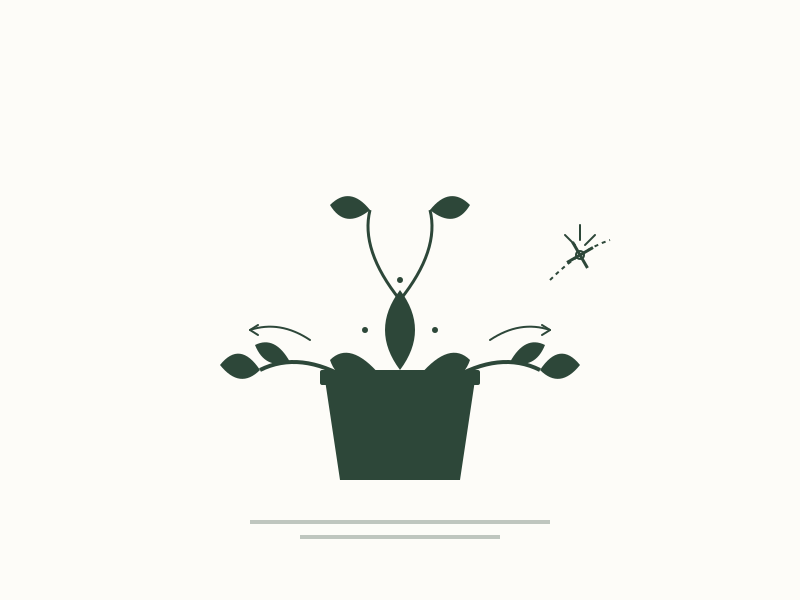
If you want a full plant, you have to perform a ‘hormonal coup d’état.’ You have to remove the source of the auxin. This forces the plant to rethink its entire life strategy. Instead of putting all its eggs in one basket (the vine tip), it’s forced to activate its ‘backup’ nodes closer to the root system. This is the only way to get true, structural fullness.
## The ‘Spider Mite High-Rise’: The Hidden Danger of Coiling
Let’s talk about the practical nightmare of coiling: pests. In this dry Portland air, spider mites are my personal demons. They thrive in stagnant, dry microclimates.
### Creating the Perfect Pest Microclimate
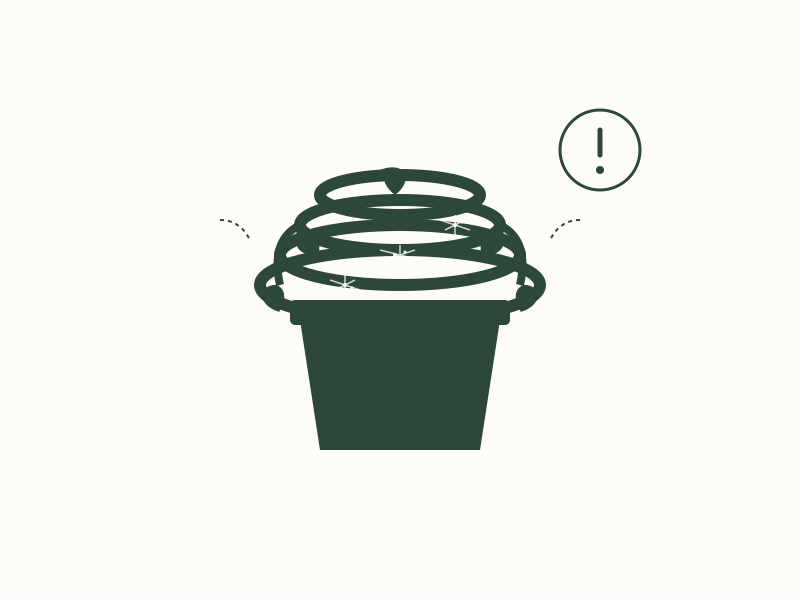
When you coil multiple layers of Pothos vines on top of each other, you are building a luxury high-rise for *Tetranychus urticae* (the two-spotted spider mite). You’ve created a dense thicket of leaves where air cannot circulate. The center of that coil becomes a pocket of dead air.
Because the nodes aren’t actually rooted, the leaves in the center of the coil are often the weakest. They are receiving the least amount of light and the least amount of water. Pests can sense a stressed plant like a shark senses blood in the water. They target these weakened leaves, and because the vines are all tangled together, the infestation spreads at a lightning pace. For more on diagnosing this, check out my guide on [Is It Dust or Spider Mites?](https://www.plantgrowthguide.com/spider-mites-vs-dust/).
### Why Airflow Matters for Pothos Health
Airflow isn’t just about preventing pests; it’s about transpiration. Plants need to ‘breathe’ through their stomata. In a coiled mess, the humidity builds up just enough to encourage fungal pathogens like *Pythium* (root rot) or *Rhizoctonia*, but not enough to actually help the plant grow. It’s the worst of both worlds. I’ve seen coiled Pothos where the top looks okay, but the bottom layers are a slimy, yellowing graveyard of leaves that have suffocated in the dark.
### Identifying Early Signs of Infestation in Coiled Vines
Barnaby is actually a great early warning system. If I see him batting at a specific part of a plant, it’s usually because he’s spotted the faint, shimmering webbing of spider mites. In a coiled plant, look for:
1. **Stippling**: Tiny yellow or white dots on the surface of the leaves.
2. **Dust that won’t blow off**: If the ‘dust’ is concentrated on the undersides of the leaves in the center of the coil, it’s not dust.
3. **Yellowing from the center out**: This is a classic sign of localized stress or pest damage within the coil.
### How To Clean a ‘High-Rise’ Without Damaging Nodes
If you’ve already coiled your plant and it’s infested, you have to uncoil it. There is no other way. You need to get in there with a castile soap solution or neem oil and wipe down every single leaf. This is why coiling is such a bad idea—it turns a 5-minute maintenance task into a 2-hour surgical procedure. If things get really bad, you might need to go to the [aggressive Strategy for Thrips](https://www.plantgrowthguide.com/treat-thrips-multiple-houseplants/) or mites.
## The Pruning Masterclass: Forcing Explosive Lateral Growth
If you want a bushy Pothos, you have to be brave. You have to cut it. I know it hurts—especially if you’ve spent months or years growing that long vine—but it is the only way to achieve a truly full, multi-stemmed plant.
### Where to Cut: The 1/4 Inch Rule
When you prune, you want to cut about a quarter-inch above a node. Why? Because you want to leave enough tissue to protect the axillary bud, but not so much that you end up with a ‘dead stub’ that will eventually rot.
When you make that cut, you are physically removing the auxin factory. Within hours, the hormonal balance in the stem shifts. The cytokinins take over, and those dormant nodes—the ones that were previously suppressed—will begin to swell. Within a week or two, you’ll see a new green ‘spike’ emerging from the leaf axil (the point where the leaf meets the stem).
### Sterilizing Tools to Prevent Pathogens
Don’t just use your kitchen scissors. I have a pair of Japanese bonsai shears that I treat better than my own furniture. Before every cut, I wipe them with 70% isopropyl alcohol. Why? Because *Epipremnum* are susceptible to bacterial leaf spot and various viruses. A dirty blade is a transport vehicle for disease. If you’re dealing with a plant that might already be struggling, like an [overwatered snake plant](https://www.plantgrowthguide.com/save-overwatered-snake-plant/), the last thing you want to do is introduce a new pathogen.
### Timing Your Prunes for Maximum Recovery
While Pothos are hardy, they have a seasonal rhythm. Pruning in the dead of winter—like right now in my freezing loft—will work, but the response will be sluggish. The best time to prune is in early spring when the light levels are increasing. The plant is naturally entering a high-growth phase, and its metabolic rate is peaking.
### What to Do with the Cuttings (The Loophole)
This is the ‘secret’ to the bushy look. You aren’t just cutting the plant to force it to branch; you are creating new plants. Each cutting is a potential new stem for your pot. This is how you bypass the ‘one vine’ limitation entirely.
## The Commercial Secret: Multi-Cutting Consolidation
Go to any high-end plant shop or even a big-box nursery. Look at their ‘lush’ 8-inch Pothos baskets. Now, look closely at the soil. You will notice that it isn’t one plant. It is 15 to 20 individual cuttings that have been rooted together.
### Why One Vine Will Never Look Like a Bush
A single Pothos vine will never, ever look like a bush. It is a vine by nature. Even if you prune it and get it to branch in two or three places, it will still look like a few long strings. The ‘bushy’ look is an illusion created by density.
### The Math of a Full Pot: 5 to 10 Cuttings
If you want a standard 6-inch pot to look full, you need at least 8 to 10 individual growth points. This is where your pruning pays off. Take your long vine, chop it into single-node cuttings (a leaf, a bit of stem, and a node), and root them. Once they have two-inch roots, plant them all back into the mother pot.
### Propagating in Water vs. Direct Soil Shoving
I’m a water propagation purist. I like to see what’s happening. It allows me to monitor for rot and ensure the roots are healthy before they face the microbial complexity of soil. However, many people swear by ‘direct sticking’—shoving the cutting directly into the soil.
In my dry loft, direct sticking is a death sentence. The cutting shrivels up before it can form roots. If you live in a humid environment, go for it. If not, stick to water. Use a dark glass jar; roots prefer darkness, as it mimics their natural underground environment.
### Root Hormone: Is It Necessary for Pothos?
Honestly? No. Pothos have so much naturally occurring auxin in their nodes that they root almost as a reflex. Save your rooting powder for something finicky like a *Ficus lyrata*. For Pothos, time and clean water are all you need.
## Fixing the Root Cause: Light Intensity and Internode Spacing
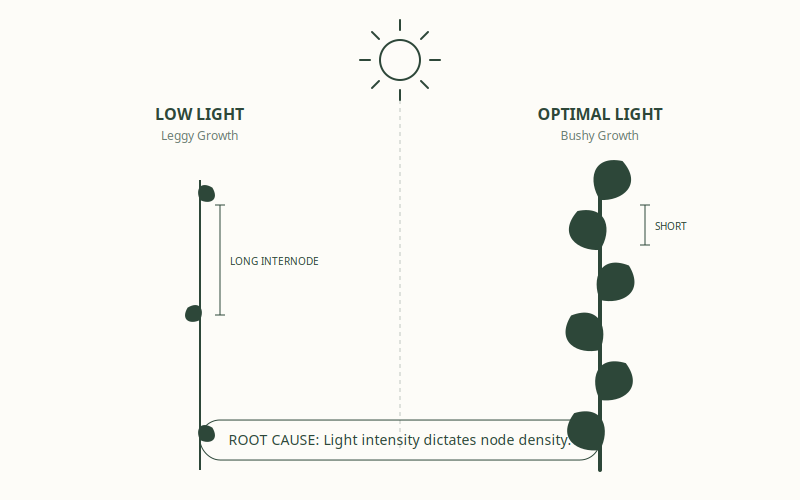
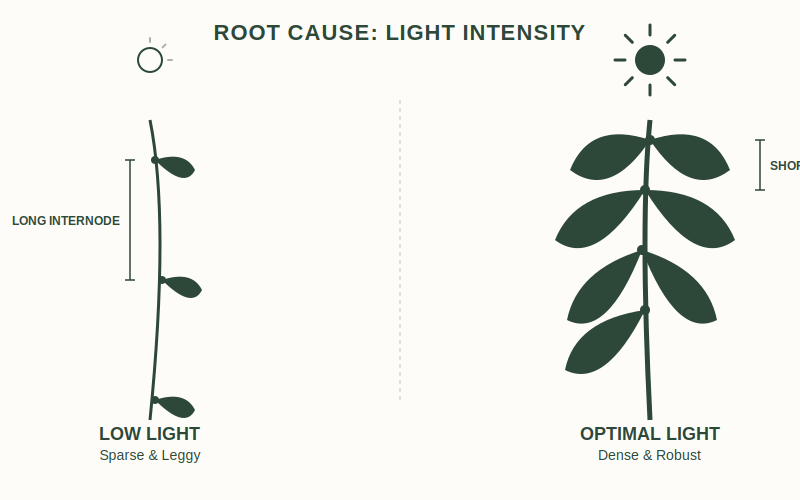
If your Pothos is ‘leggy’ (meaning there are long stretches of bare stem between leaves), it isn’t ‘unhappy’—it’s starving.
### The Etiolation Effect: Why Your Pothos is Stretching
Etiolation is the biological process where a plant grows rapidly toward a light source, sacrificing leaf size and stem thickness for length. The plant is literally trying to ‘reach’ for survival. When light is low, the plant produces more gibberellins, which cause the cells in the internodes (the space between leaves) to elongate.
### Measuring Light: Foot Candles vs. LUX for Pothos
Stop guessing. Download a light meter app on your phone. It won’t be as accurate as a $500 PAR meter, but it’s better than ‘bright indirect light,’ which means absolutely nothing.
* **Low Light (Survival only)**: 50–100 foot candles.
* **Medium Light (Steady growth)**: 100–250 foot candles.
* **Optimal Light (Bushy, compact growth)**: 250–500 foot candles.
If your Pothos is getting less than 100 foot candles, no amount of coiling or pruning will make it bushy. It will always be thin and sad.
### The Ideal Window Placement for Compact Growth
In Portland, my north-facing windows are useless in winter. I keep my Pothos about two feet away from a west-facing window. This gives them a blast of intense afternoon sun that is tempered by the clouds. If you have clear skies, an east-facing window is the ‘Goldilocks’ zone—bright morning sun without the scorching heat of the afternoon.
### Using Supplemental Grow Lights for Deep Pots
If you have a large, deep pot, the light often hits the top leaves but leaves the soil surface in total darkness. This is why the top of the pot goes bald. I use small LED ‘halo’ lights that I stick directly into the soil to illuminate the base of the plant. This keeps the lower leaves photosynthesizing and prevents the plant from abandoning that lower foliage. For larger plants, you might need a more aggressive approach, similar to [pruning a Monstera that’s too tall](https://www.plantgrowthguide.com/?p=1304).
## Advanced Layering: Making the Coiling Method Actually Work
Okay, I’ve spent thousands of words telling you why coiling is a trap. But, if you are stubborn—and I respect stubbornness, I’m still trying to grow Calatheas in this dry air—there is a way to make it work. It’s called **Air Layering** or **Ground Layering**.
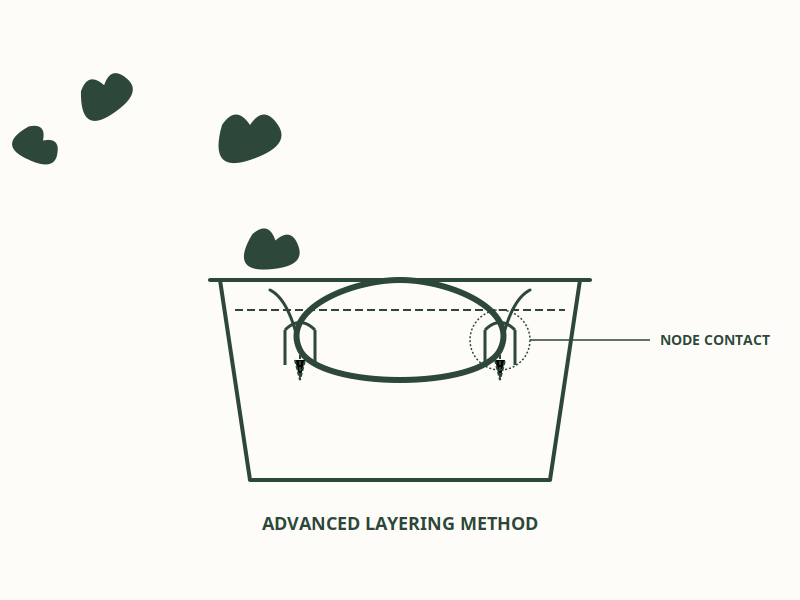
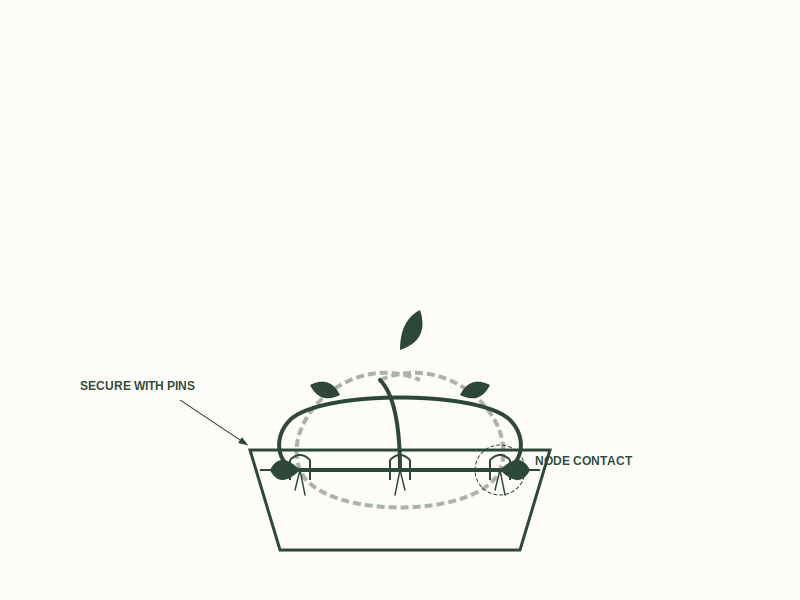
### The Bobby Pin Method: Securing Nodes to Soil
If you simply lay a vine on the soil, the node won’t touch the dirt. You need to pin it down. Use a plastic-coated bobby pin or a piece of bent wire to physically press the node into the substrate. This ensures the ‘meristematic trigger’ is in constant contact with moisture.
### Wounding the Stem to Stimulate Rooting
Here is the pro tip: take a sterilized blade and very, very gently scrape the brown skin off the bottom of the node before you pin it down. You want to expose the green cambium layer. This ‘wounding’ triggers a massive healing response, sending a flood of growth hormones to the site and dramatically speeding up root formation.
### Maintaining Localized Humidity for Soil Contact
To make this work in a dry environment, you need to create a ‘micro-greenhouse’ over the pot. I use clear plastic wrap over the top of the soil (leaving a gap for the main stems to breathe). This traps the evaporating soil moisture right against the pinned nodes. Within two weeks, those nodes will have sent ‘anchor roots’ into the soil.
### When to Sever the ‘Umbilical’ Vine
Once the nodes are rooted, you have a choice. You can leave the vine coiled, or you can do what I do: cut the vine between the new roots. By cutting the ‘umbilical cord’ between the rooted nodes, you break apical dominance for *each segment*. Suddenly, instead of one long vine with five rooted points, you have five individual plants, each of which will start producing its own new growth.
That is how you turn a ‘coiling hack’ into a legitimate horticultural success.
Barnaby has finally given up on the Pothos and moved on to judging me from the top of the bookshelf. The radiator is still hissing, and the loft is still dry, but at least my plants aren’t falling for social media myths. Don’t let your Pothos be a victim of the coil. Cut it, light it, and stop believing everything you see on a 15-second video loop.
Leo Vance
Leo Vance is a veteran botanical curator and rare plant collector with over 15 years of experience in biological engineering and hormonal optimization of indoor greenery. After a catastrophic loss of his collection in 2018, he dedicated his life to sharing technical, factual, and practical plant care strategies to help others build resilient indoor sanctuaries.