This article was researched and reviewed by Leo, an indoor plant specialist.
# Technical Guide to Adjustable Grow Light Systems During periods of low natural light, such as winter months in northern latitudes, indoor plants often face significant light deficits. When ambient light levels drop and indoor heating reduces humidity, botanical collections can experience physiological stress. This period is when etiolation, or “legginess,” typically occurs in indoor cultivation environments if supplemental lighting is not correctly implemented.Guide Overview
- Etiolation and Light Attenuation in Indoor Environments
- Photosynthetic Efficiency in the Lower Canopy
- The Inverse Square Law: The Necessity of Height Adjustability
- Understanding PPFD and Micromoles
- PAR vs. Lumens: Metrics for Plant Growth
- Light Requirements for Variegated Taxa
- Strategic Placement: LED Bars vs. Single-Point Spotlights
- LED Bar Geometry and Thermal Management
- Cultivation in Zero-Natural-Light Environments
- Managing Photoperiodism and Light Cycles
- Light Intensity and Pest Resistance
- Cell Wall Integrity and Secondary Metabolites
- Adjustable Grow Light Hardware Recommendations
- Hardware Specifications and Standards
Etiolation and Light Attenuation in Indoor Environments
Etiolation is a physiological process in plants grown in partial or complete absence of light. It is characterized by weak stems, long internodes, and small leaves. In dense indoor collections, light attenuation—the reduction in light intensity as it passes through a medium—is a primary factor in lower leaf loss. In a multi-layered canopy, the upper leaves absorb the majority of available photons, creating a photosynthetic shadow over the lower foliage. When the lower leaves fail to produce sufficient glucose to offset their metabolic cost, the plant may undergo abscission, shedding those leaves to conserve resources.Photosynthetic Efficiency in the Lower Canopy
Photosynthetic efficiency refers to the rate at which a plant converts light energy into chemical energy. During winter months, when natural light is insufficient, plants often operate at a caloric deficit. If a grow light is fixed at a high position, the lower canopy receives sub-optimal light levels. This results in increased internodal spacing as the plant attempts to reach higher light intensities. To mitigate this, light sources must be adjustable to ensure penetration into the lower canopy zones.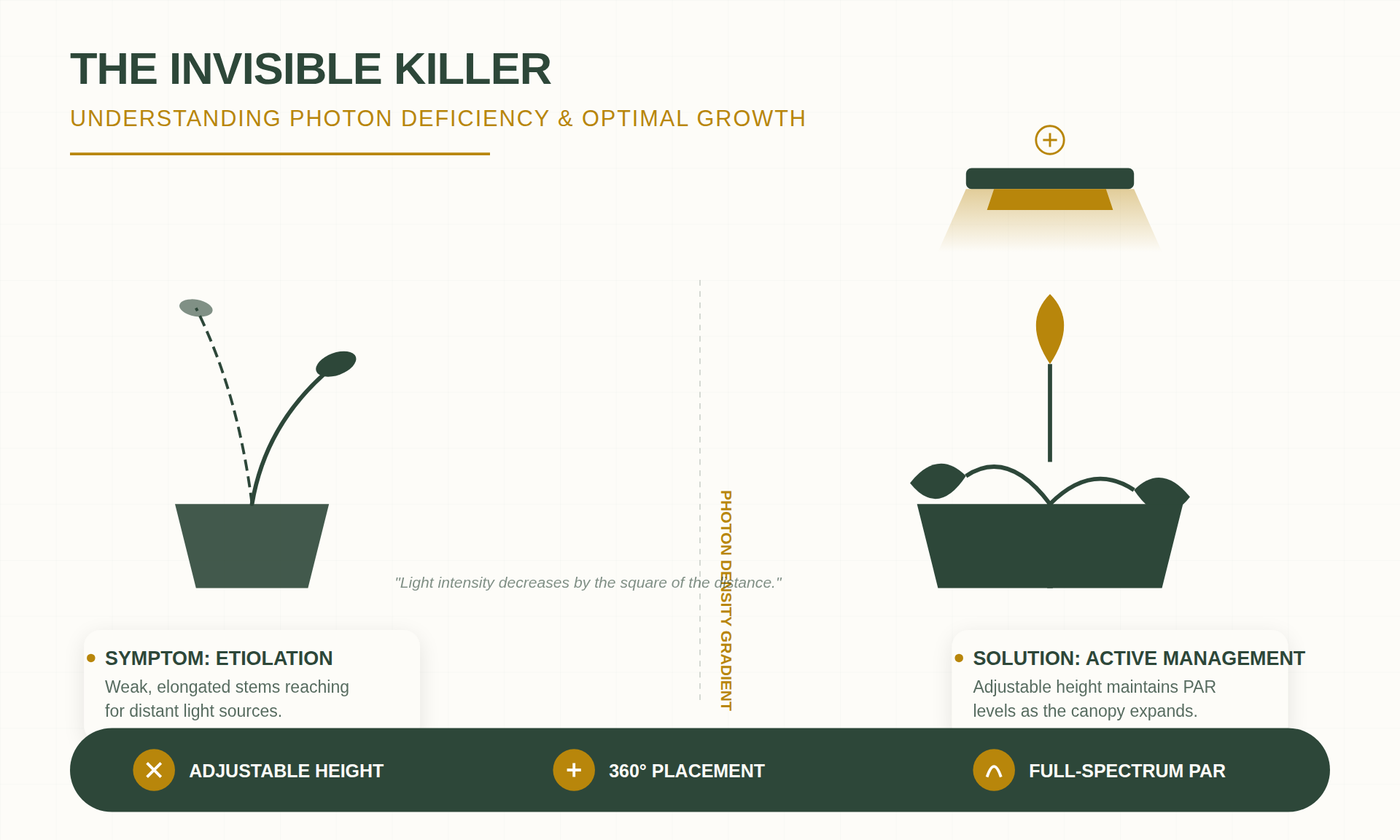
The Inverse Square Law: The Necessity of Height Adjustability
The physics of light distribution is governed by the Inverse Square Law. This law states that the intensity of light is inversely proportional to the square of the distance from the source. For example, increasing the distance between a light source and a plant from one foot to two feet reduces the light intensity to 25% of its original value. At three feet, the intensity drops to approximately 11%. Consequently, fixed-height ceiling lights are often ineffective for high-light tropical plants unless they utilize high-output industrial components.Understanding PPFD and Micromoles
In technical horticulture, light is measured via Photosynthetic Photon Flux Density (PPFD). PPFD quantifies the number of photosynthetically active photons falling on a given surface area each second, measured in micromoles (μmol/m²/s). Variegated species, such as *Monstera deliciosa* ‘Thai Constellation’, require higher PPFD levels to maintain their non-chlorophyllous sections compared to non-variegated counterparts.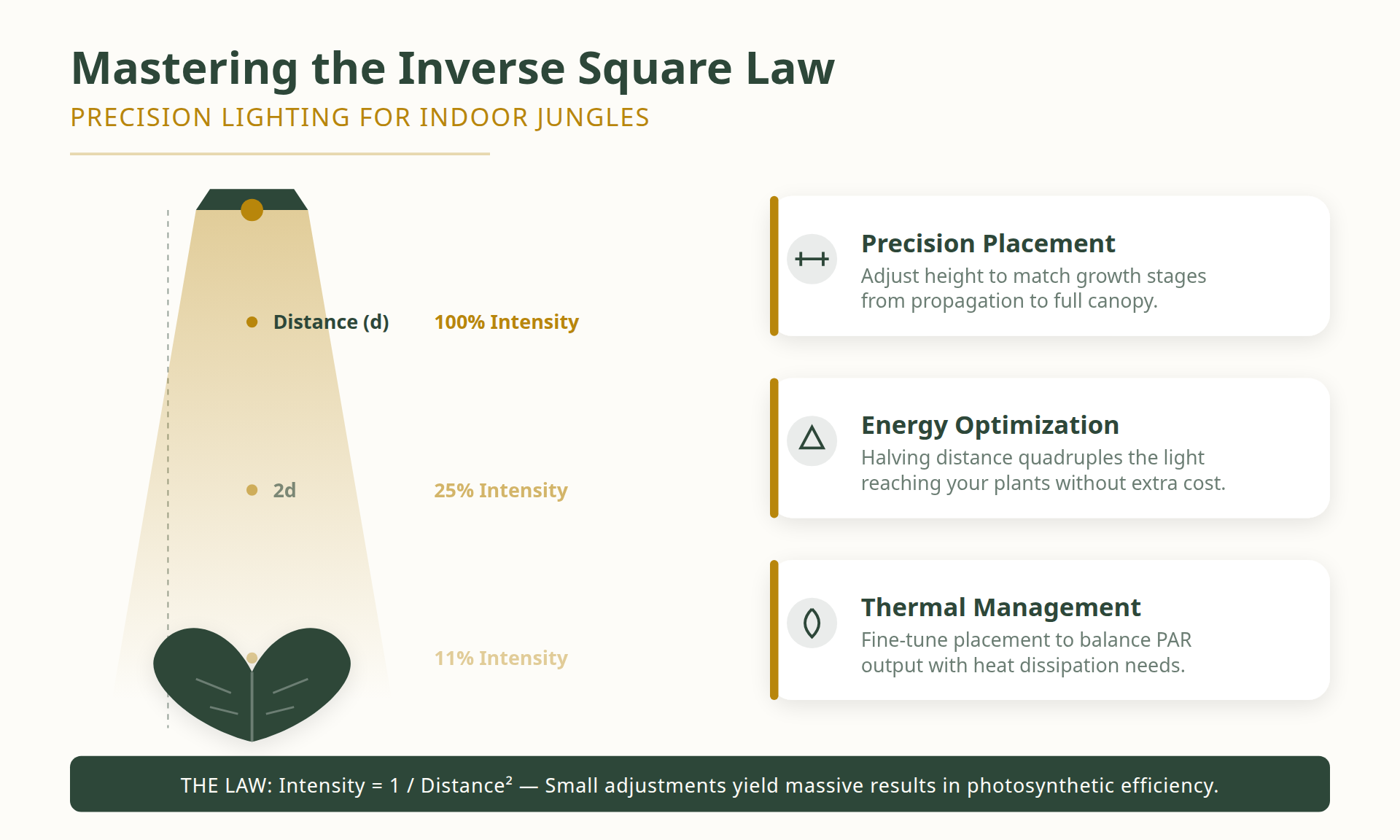
PAR vs. Lumens: Metrics for Plant Growth
Lumens are a measure of brightness as perceived by the human eye, which is most sensitive to green and yellow wavelengths. However, plants primarily utilize the blue and red ends of the spectrum for photosynthesis. This range is known as Photosynthetically Active Radiation (PAR), typically spanning 400 to 700 nanometers.Light Requirements for Variegated Taxa
Variegated plants contain sectors that lack chlorophyll. These white or cream-colored areas do not contribute to photosynthesis but still require metabolic energy for maintenance. To prevent the plant from reclaiming these sections (often seen as “browning out”), the chlorophyll-producing green sections must operate at higher efficiency. Full-spectrum LED bars provide the necessary PAR to support these high-energy demands. During short-day cycles, extending the photoperiod to 14 hours can help maintain variegation stability.Strategic Placement: LED Bars vs. Single-Point Spotlights
Single-point light sources, such as spotlights, create concentrated “hot spots” with rapid intensity drop-off at the periphery. This often results in asymmetrical growth patterns.LED Bar Geometry and Thermal Management
Linear LED bars provide more uniform light distribution. By distributing diodes across a longer fixture, the light creates a consistent field of illumination, reducing harsh shadows and ensuring peripheral plants receive adequate PPFD.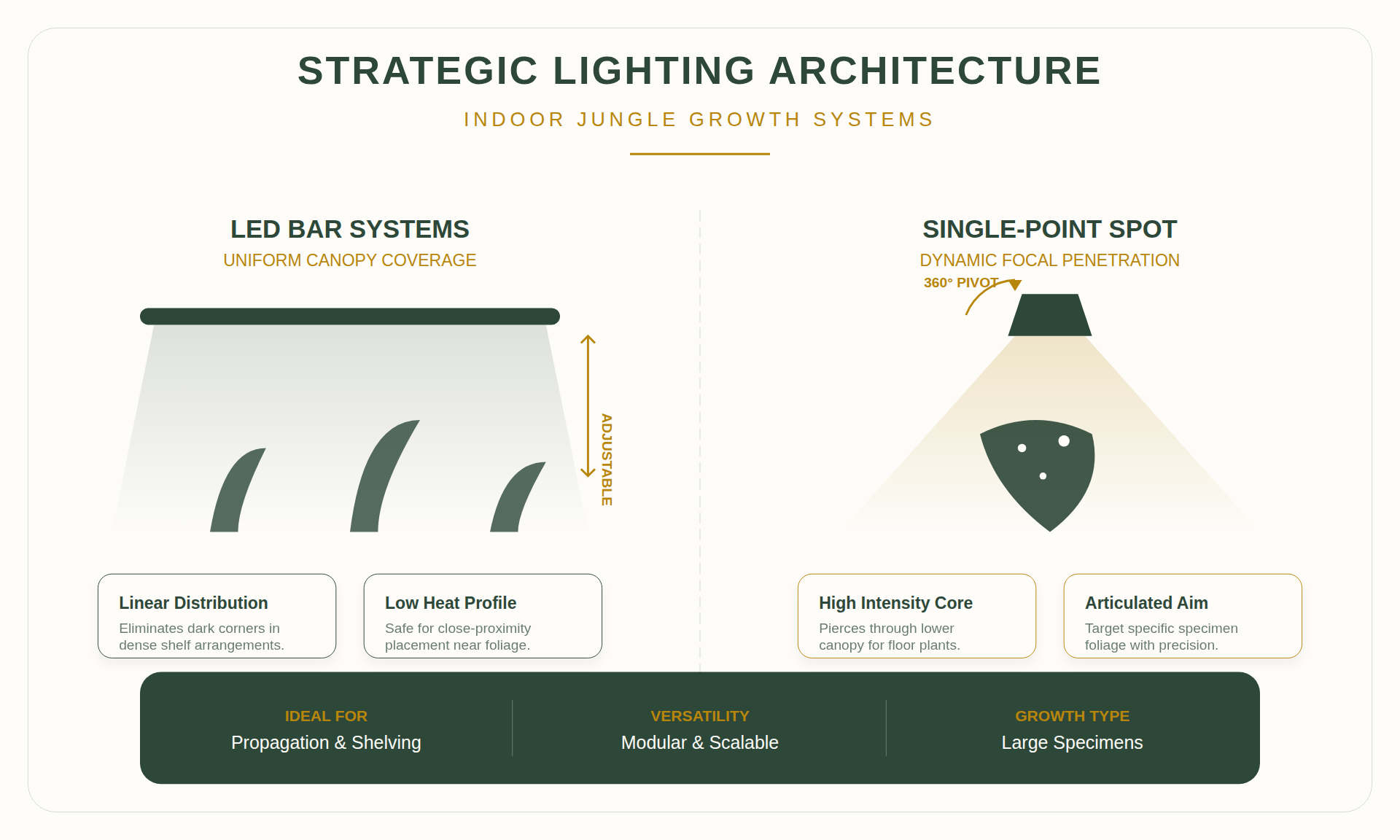
Cultivation in Zero-Natural-Light Environments
In environments with no natural light, supplemental lighting becomes the sole energy source. In these scenarios, it is necessary to replicate the plant’s circadian rhythm through controlled photoperiods.Managing Photoperiodism and Light Cycles
Tropical plants generally require a photoperiod of 12 to 16 hours. Automated timers are recommended to ensure consistency. Adjustable stands in these environments allow for “light tiering”: placing high-light species (e.g., *Hoya*, *Monstera*) closer to the light source and low-light species (e.g., *Anthurium*, ferns) on lower shelves where light attenuation naturally occurs.Light Intensity and Pest Resistance
Light levels directly influence a plant’s susceptibility to pests such as thrips and spider mites. While chemical treatments are common, the plant’s internal defense mechanisms are heavily dependent on photosynthetic output.Cell Wall Integrity and Secondary Metabolites
Optimal light levels facilitate the production of glucose, which is used to synthesize cellulose for cell wall reinforcement. Furthermore, plants under sufficient light produce secondary metabolites that serve as chemical defenses. Plants grown in low-light conditions often have thinner cell walls, making them more vulnerable to piercing-sucking insects. Maintaining high light levels through adjustable fixtures contributes to plant “hardening.” Additionally, the use of blue sticky traps is an effective technical method for early detection of thrips, which are more attracted to blue wavelengths than standard yellow traps.Adjustable Grow Light Hardware Recommendations
Modern horticultural lighting has transitioned from “blurple” (red/blue) spectrums to high-efficiency, full-spectrum white LEDs. When selecting an adjustable system, three hardware components are critical: mounting flexibility, driver quality, and diode efficiency.Hardware Specifications and Standards
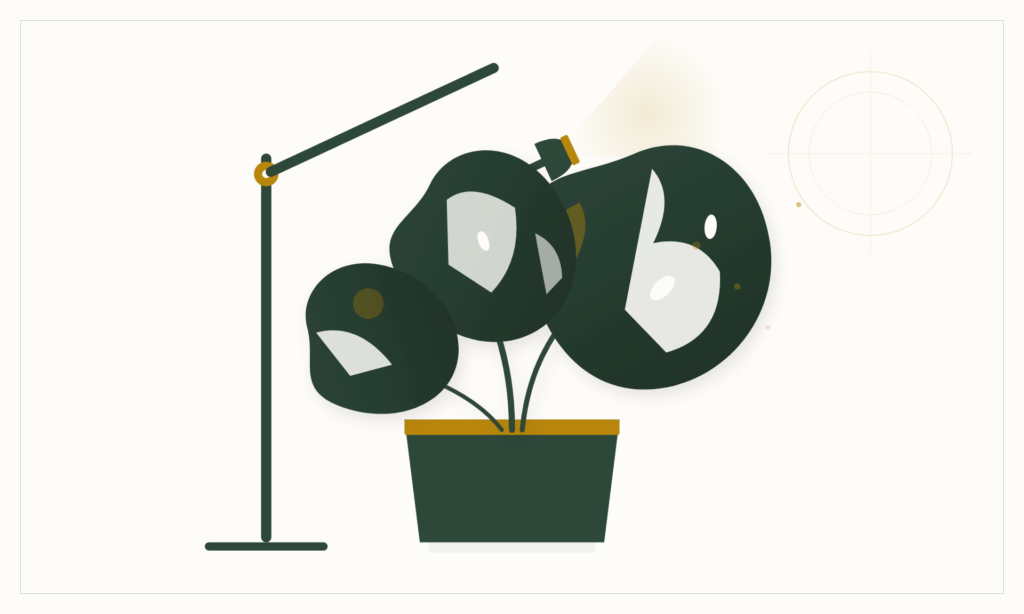
1. **Samsung LM301B or LM301H Diodes**: These diodes are recognized for high luminous efficacy and a spectrum that closely mimics natural sunlight. 2. **Mean Well Drivers**: The driver regulates power to the LEDs. High-quality drivers ensure longevity, minimize flicker, and provide reliable dimming capabilities. 3. **Telescopic Mounting**: Hardware should allow for 4 to 6 feet of vertical adjustment to accommodate the growth of floor-standing specimens.